Monday, October 10, 2011

Michelin in Mendoza


Doesn't this look delicious?

Sadly, it was not.

The chocolate ganache had off flavors from the refrigerator, neither the ganache nor the biscuit were very chocolatey, and the fruit was intensely sour. Blech.

This was the finale of one of our best meals in Mendoza, lunch at La Bourgogne in the Vistalba Bodega. We had high hopes for La Bourgogne because it advertises itself as *the only* Relais & Chateux restaurant in Argentina. If you're cooler than I am, you already know that Relais & Chateux is an association of mostly European hotels and restaurants that has very strict admissions standards and supposedly assures guests exquisite cuisine. (I'd never heard of it before coming to Argentina.)

We don't usually go to places like this for lunch. On the whole, we're more middle-brow diners, but after a month of doughy pumpkin sorentinos, 5-lb bricks of veal, empanada re-runs, and insipid bread, we were desperate for something fresh, refined,...frankly anything good.

So we began escalating our eating, eventually hitting all of the hot spots in Mendoza:the aforementioned La Bourgogne, 1884 (celebrity chef Francis Mallmann's fancy-pants joint and "top" restaurant in town), expat favorite Azafrán, newcomers Siete Cocinas and Florentino Bistro, the Hyatt's special wine bar associated with The Vines tasting room, and the restaurant at (Bodega) Salentein Posada.

Each of them had their high points:
  • La Bourgogne: great olive oil, perfectly attentive, yet impersonal, service
  • 1884: pretty setting, tender baby goat (their signature dish)
  • Azafrán: decent lettuce! (no small accomplishment, I'm telling you.)
  • Siete Cocinas: great-sounding dishes, inspired menu
  • Florentino Bistro: bread with crust (halleluah!), more good olive oil, tasty baby squid and chorizo salad
  • The Hyatt: sweet, sincere, proper wine service
  • Salentein: tasty asparagus quiche, good wines

But collectively the food they delivered was so...crude (not in a good way) that both of us were kind of depressed at mealtime.


I apologize in advance to the Argentine people, and moreover to the people of Mendoza, because they were really, really nice. And we are very grateful for their hospitality. But the food there is...not what it could be. I'm trying to be gentle here. But I think that visitors' enthusiasm for the people of Argentina often gets transferred to their description of Argentinian food.

Part of the problem, I think, is the cuisine itself. If I had to describe it in one word, it would be "HEAVY." (Incidentally, *I* got heavier in Argentina too, which does not make me happy.) On almost every menu you will find one of the above:
  • Beef ("bife") in numerous forms
  • Pasta
  • Pumpkin
  • Pizza
  • Empanadas
  • Cazuelas (oven-baked casseroles or hearty stews)
  • Grilled goat cheese
  • Media lunas (mini sweet or savory croissants)
Sounds good if you're ravenously hungry at this moment, but imagine these are your only choices for lunch and dinner every night for a month. Three months. A year. A digestive workout, no?

Beyond the cuisine itself, cooking execution in Argentina is...casual, let's just say. The chefs clearly don't get their panties in a bunch over details. For example, at the Mendoza Hyatt our "tapas" arrived on plates garnished with browning lettuce. This, my friends, I am certain, would get you fired at the Hyatt in Hong Kong.


Toward the end of our trip E started humming, "Don't cook for me Argentina." (Smartass.)

I should also mention that many of the waiters we encountered weren't terribly detail-oriented either. It was the rule, rather than the exception, that we sat down at a table in a restaurant and found crumbs and residue from the previous diners' meal. Again, not the kind of thing you'd notice on a 10-day vacation, but after more than a month of it, it starts to feel grimy.

Beyond cooking execution, it sure seemed like getting fresh produce to the table is a problem in Argentina. We were served a lot of brown lettuce on this trip, not only at the Mendoza Hyatt, but at cafes in Buenos Aires, at the supposed "top" restaurant in Salta called Jose Balcarce, and many other places. There must be serious water problems, distribution problems, or both. If anyone knows, please email me. One Sunday I was shocked to walk into Carrefour near our rented apartment to find this display of rotting vegetables...


Would you put one of these in your cart? The guy behind me in line did (a cauliflower)!

As long as we're talking raw ingredients, I wanted to say a few things about the Argentine beef. After a few parrilla stops in Buenos Aires, we found ourselves studiously avoiding it. And where there were no other palatable options, we would choose the veal over the mature beef itself. The reason is that the texture of the muscle fibers is very coarse so that a slice of filet looks almost raggedy...


Not being a meat quality expert, I looked it up on in Harold McGee's awesome food science book, On Food and Cooking. McGee says:

"Full-flavored meat comes from animals that have led a full life. However, exercise and age also increase muscle fiber diameter and the cross-linking of connective tissue: so a full life also means tougher meat. In centuries past, most people ate mature, tough, strongly flavored meat, and developed long-cooked recipes to soften it. Today, most of us eat young, tender, mild meat that is at its best quickly cooked; long cooking often dries it out." (Can't figure out page numbers on the Kindle, sorry...)

I'm guessing that this is the explanation for our reaction to Argentine beef. We're accustomed to beef from younger animals, fed on grain, and not exercised much. Argentine beef, I'd assume, gets to walk around and eat grass, which likely makes its muscle fibers bigger and stronger. In theory, this sounds like a much better way to go, but it clearly requires adjusting your palate.

Speaking of palates, that was another subtle dimension of Argentine food that irked us. Time and time again, we found that one individual item on our plate might taste good, but when we moved on to the accompaniments, it was like fingernails on a chalkboard. I thought we were just being ridiculous, but when I joined a totally fabulous tour of the Uco Valley with Trout & Wine, another guest commented that two of the wine pairings in our meal were just kind of blah. There was no resonance or interplay of flavors with the food.


What was also interesting was how our guide responded: she said something like, Oh, but it's hard to do a good wine pairing.

I really liked our guide. She was super well-informed and really nice, but...huh? It's *hard* to do a good food-wine pairing? So what? It's hard to harvest truffles. It's hard to prepare a perfect Peking duck. All over the world, millions of people bust their butts to make delicious food, some of which is dirt cheap. They do it because they *know* how good food can taste, and good food is something that matters to them!

Oh, and one more thing: protection of Argentine industry is not helping food quality either. While E might have heard about President Cristina's import restriction policies before our visit, we had no idea to what extent it would shape the consumer spectrum. Basically, if you want to buy any type of food, there is one (maybe two) Argentine products available at a reasonable price, and then there are imports available for about 3X that. So, for example, if you're accustomed to a cup of classic Twinings Earl Grey tea each morning, as E is, you can pay roughly US$10 for a box of 25 tea bags or you can spend approx US$3 for a box of Té Taragüi Earl Grey, which, frankly, just isn't as good. But you tolerate not-as-good because US$7 is kind of a lot.


Ok, so why am I picking on Mendoza in particular? Because I liked it there so much!

To start off with, Mendoza is a genuinely world-class destination. Mendoza province is the heart and soul of Argentina's wine industry, producing more than 60% of Argentina's wine. (On the ground, people will tell you it's 80%). Argentina itself was the fifth largest producer of wine in the world, according to the 2005 World Atlas of Wine, so that makes Mendoza a big fish in the world of wine. Beyond wine, Mendoza province is also home to Acongagua, which at 22,841 ft, is the tallest mountain in the Americas AND one of the Seven Summits, which are the seven highest summits on the seven continents (or six continents if you ask my French-speaking nephew).


That's really cool!

Mendoza is also tremendously sunny. Another unsubstantiated statistic I heard was that it only gets 20 rainy days per year. In practice, it was gloriously sunny for 5 of our 7 days in town. But it's not just the sun, it's the beautiful plane trees arcing over the city streets, creating big canopies of leaves for the light to shine through. I don't know why, plane trees always make me happy!


Moreover, there are lots of cool houses in Mendoza. Take a look at this cool house we rented. It was designed by Argentine architect Carlos Pelegrina, who now works in NYC. While this is clearly a special house, there were many interesting-looking modern designs all over the city.


I've already mentioned that the people we met in Mendoza were nice. They were really, really nice. And that forgiving attitude my tour guide had was a relief when *I* screwed up and boarded a bus without change. Many other passengers offered to let me use their bus cards and then made sure that I got off at the right stop.

Ok, ok, Mendoza is a neat place, but the food is...lacking. So what's the title of this post about?

If I ever lived in Mendoza, I would want to create a program called "Michelin in Mendoza." Its explicit objective would be to get five Michelin stars awarded to Mendoza restaurants within five years.

We would do it by creating an association that twice a year (during Mendoza's off seasons) would bring world-class chefs, food critics, and restaurateurs to the city. They would spend a week dining at a selection of the city's top restaurants, and they would award a prize to the best. The winning restaurant would get a three-day master class for its cooks and consulting on its menu from the visiting chef.

The association would need to have only nominal fees so that even small restaurants could participate. And the contenders for, and winners of, each season's prize would need to be written up in a major publication like Los Andes newspaper so restaurants would have strong incentive to participate.

Of course, we would also need to address the whole question of the sourcing of fresh ingredients and how to deal with the cost of imported ingredients. And more importantly, we'd have to figure out how to get Michelin inspectors to visit.

But, I am hoping that appealing to Argentine pride, and specifically Mendocino pride, would bypass that laid-back attitude and direct some of the incredible care I've seen in the lovely leatherwork, masonery, and architecture on this trip to the craft of food.

What do you think? Could it work?


Tuesday, October 4, 2011

There's something about Salta


Where am I?

It's true...when I took this picture, I was kind of lost. But that's not why I was feeling disoriented.

Here we are on the other side of the world -- I mean waaaay on the other side of the world -- and it feels like the Napa Valley. Sunlight filtering through leaves, roses blooming in people's yards, a quiet drive on a two-lane highway...


It's like I'm looking at the reflection of the place I'm from reflected across the equator.Kind of eerie to know there's a place so similar to your own upside down on the other side of the globe.

Well, except that it isn't a perfect reflection. Salta, Argentina is
latitude 24°48' S while Napa is 38°29'N. That's a big difference.

So what's
24° N? Whoa, that's like San Jose Del Cabo, Mexico (24°7'N).


Interesting, because this is Salta too (the Calchaqui Valley to be specific):


Salta is both the name of one of Argentina's 23 provinces and of the capital city within that province.

The whole time we were in Salta last week, I was feeling these funny waves of familiarity and foreign-ness.

One of the things Salta is famous for is folk music (do click here -- it's beautiful). And somehow it seemed like there was music everywhere, sweet Andean-sounding songs lilting softly around our breakfast table, over the loudspeaker at the supermarket, from cafes...and then, as I was walking through the streets of the tiny town of Cafayate I heard folk music drifting from behind the corrugated metal wall of a warehouse...and then I heard a German voice doing some kind of beat poetry over the music and realized it was some kind of trip-hop mixup of Andean music by German musicians!

It's beautiful and eerie here.

Things that seem old or basic and primitive are mixed in with startlingly new things. And it's not always clear whether it is the elemental or rustic becoming modern or whether people are letting modern things fall away as they go back to their roots.

At the Sayta Cabalgatas ranch in Chicoana, the eccentric and memorable proprietor Enrique told us how he first left his home of Patagonia, went on to work in the oil industry, lived in Texas, was a workaholic, lost his wife to an accident, and decided to make a major change in his life...so he went back to his roots. Well to the country anyway, but not to Patagonia (because the "hijue-puta wind" makes it impossible to do anything). But to Salta, where the whether is warm, you can sit under big shady trees drinking wine and grilling on the asador with friends.


In this picture: two great young women (one from Switzerland, the other from Canada) interning at the ranch, living like gauchos, and a really nice Brazilian also drawn to the romance of the gaucho lifestyle.

After refilling my wine glass for the nth time, Enrique asked me, "So what is *your* life project?"

In my brief experience with Argentines, the conversation often turns to life philosophy and relationships ;-)

But the point is, Salta holds a special place in people's minds. It's easy to be drawn in by Salta, but somehow difficult to really reach her.

Whenever I told anyone in Buenos Aires I was coming to Salta, they would sigh and say, "Salta la linda" (trans. Salta the pretty one).

Salta, pretty and remote, attracts not only Swiss adventure-seekers and Patagonian ex-oilmen, but also US-born investor Doug Casey. Others probably know more about Casey than I do, but as far as I understand, he's both a mining and metals expert and a pretty hard-core libertarian who has outspokenly predicted the economic demise of the USA.

Casey has also apparently traveled to 175 countries and lived in 12 of them. His response to the oncoming disaster in the US has been to create an enormous development in Cafayate, Argentina (in Salta province) in partnership with Juan Esteban Romero, an Argentine businessman and son of Juan Carlos Romero, governor of Salta from 1995-2007.

My sweetheart doesn't agree with all of Casey's doomsday predictions, but he does see merit in the notion that people who are able to afford to, should own a home in the countryside that they could retreat to in case world events make their normal residence suddenly unattractive. So, since we're traveling the world looking for places to live too, we decided to go have a look at
La Estancia de Cafayate.


It's this vast, luxurious, remote complex with an enormous golf course at the heart of it. But also a polo field (Argentines love polo), sand dunes, and a vineyard that is supposedly part of the financial design of the community. Oh, and there's going to be a big hotel too and eventually a little marketplace...


What was interesting to us was that, although much of La Estancia is already sold (purportedly 29 countries represented), there were only a handful of houses actually built...


When you see how houses are built in Salta, however, it seems like a minor miracle that so many buildings already exist at La Estancia!

Construction equipment, it seems, is in short supply. Instead, for those who can afford it, there are skilled craftsmen, mostly masons, who build houses from the ground up with their hands. It's all "wet construction." Take a look at this stone and tile work. It makes me think of the three little pigs and the big bad wolf (if the American economy huffs and puffs, it's not going to blow this house down!).


This kind of stonework is a regional tradition. Earlier in our trip, I noticed a beautiful dam, which appeared to be constructed entirely by hand-fitting stones (without mortar?)...


This sense of solidness will be one of my lasting impressions of Salta. A sense of unhurried thoroughness and quality.

This sensibility brought to the preparation of our breakfast everyday at the Villa Vicuña in Cafayate was a real pleasure for me. The table linens were sparkling white, the bread basket offered up on hand-crocheted lace, coffee and hot milk poured by hand to my indication of proportion. A level of service and attention to detail I would only have expected from a five-star hotel.


So...how was the food? ;-)

Weeeelll...let's just say that, while I saw E genuinely happy for the first time on this trip watching the sun set and listening to birdsong in Cafayate, he was nonetheless still counting the days to our departure from Argentina.

Which is not to say there isn't some good food in Salta. (Salta is actually known within Argentina for having great regional cuisine.) But I would say it's pretty limited. Nevertheless, I discovered some new gastronomic treats that I will carry in my memory banks for the rest of my life.

To start off with, Salta -- and in particular Cafayate -- specializes in the variety of white wine called Torrontes. Because I have a sensitive snout, this was a real pleasure for me. The bouquet of the wine smells distinctively of orange blossoms. But the actual flavor is much drier. I soon found myself craving the combination of scent and flavor. Here we are enjoying a glass of La Estancia's own (very nice!) Torrontes produced by La Porvenir Bodega.


Wine aside, Salta is perhaps most famous gastronomically for its empanadas. As they appeared over and over (and over) again on menus, I started grumbling to E, "Empanadas are not a cuisine!"

BUT the truth is that they were really yum. Surprisingly small, with a delicate, thin skin toasted brown in places, they are unwaveringly filled with the same four, very flavorful fillings: charqui (salted, dried meat), choclo (sweet corn) with cheese, knife-cut steak, and chicken. The tastiest I had were made to order for me at El Chueco in Salta city center (not far from Doña Salta).


One other Salteñan treat I found very yummy was locro. Actually, I should refer to locro as an Andean treat because versions of it are eaten across Argentina, Bolivia, Ecuador, and Colombia. It's basically a sunny, soul-satisfying stew of beans, corn, pumpkin, pork, bacon, veal, and a lot of other tasty ingredients. You can see how to make the Argentine bicentennial locro recipe here. I had a very nice version at El Rancho in Cafayate.


It's these flavors, the flowering trees, the abundant bird song, and the midnight dog serenades that I will remember about Salta ;-)

And if I could ever drag E back, I would love to venture further out over the rocky roads to remote Colome where the Hess family has a beautiful organic winery and a museum devoted to one of my favorite artists, James Turrell.


I would also try to not get lost again on my way to the Cerro de Siete Colores (Hill of Seven Colors) in the Quebrada de Humahuaca, which is listed as a Unesco World Heritage site not only because it's beautiful, but because it "has been used over the past 10,000 years as a crucial passage for the transport of people and ideas from the high Andean lands to the plains."


So if *you* go to Argentina, I highly recommend that you spend less time in Buenos Aires and more time in Salta!

Monday, September 19, 2011

Buenos Aires disconnect


Which city has more psychotherapists per capita than any other city in the world?

Before coming here two weeks ago, I would never have guessed the answer was Buenos Aires. But after my first hour exploring the streets of BA, I noticed that something was really different. As strangers walked toward me, I would see them noticing me, taking me in, even...making eye contact! Strangers! (Totally freaked me out.)

As the Canadian hairdresser we met here told us, there's a reason why things don't happen on time in BA. People are taking time to connect. When he first got to BA, he said, he used to get aggravated when he showed up at the doctor's office for his 10am appointment and found himself still sitting in the waiting room at 11:30. He used to get frustrated. But now that he's older and wiser and more assimilated, he realizes that the reason the doctor is late is because she takes time to talk to her patients and learn about their lives and *hug* them when they leave.

Ladies and gentlemen, I will go on the record as saying I am not interested in being hugged by any of my doctors.

This may be why, now that I'm surrounded by 13 million connectors, I'm not feeling all that connected to Buenos Aires.

I was out running yesterday afternoon, keeping my eyes down with hopes of avoiding piropos -- and tried to meditate on the disconnect. Why do I not love Buenos Aires the way everyone else who visits seems to love Buenos Aires?

Maybe I would have loved Buenos Aires if I'd come here when I was 18.

Then the sound of guitar music drifting in through the window would have seemed romantic and bohemian. The couples dancing tango at the milonga in San Telmo with their eyes shut, listening to each other's hearts would have inspired me, at the very least, to buy a cool tango dress. The ubiquitous craft markets, murals, and even live artists sculpting nudes in the window of a gallery would have affirmed my belief that art IS a social necessity. And the massive slab of beef they plonked down on my plate at La Brigada would have thrilled the part of me that loves machismo.


Instead, I am looking down at the slick of blood on my plate and trying to have some kind of "primal" response. Instead, my mind is uncooperatively remembering how my Time Out Buenos Aires guide said that one of the first European arrivals to these shores, Juan Díaz de Solís, was captured and eaten by the indigenous tribes. I'm connecting with my inner cannibal.

Is it me? Is it Buenos Aires?

I remember four years ago when I left my marketing research job and went traveling, I thought very carefully about where to go. It was, in part, prompted by reading a blog post somewhere that pointed out that one's experience on the road depends in large part on why you are traveling.

When we travel, our experience isn't just formed by what we encounter on our journey, it's also formed by what we are seeking and by the value system against which we measure the things we find. If you are working a 60+ hour a week office job and living in the same flat you've had for the past five years, you might be traveling because you want to feel transported from the mundane-ness of day-to-day life. You'll probably seek out romantic experiences and suspend judgement of the things you encounter because you're seeking transformation, a different way of seeing things.

That's not what we're doing.

It's a very strange experience to go traveling when you don't have a home. Romance to me, right now, is like eating fois gras when all I really want is a piece of bread (more on bread later). How can I set my value system aside when I don't know if I'll ever live in a society again that operates in a way that makes sense to me? Spookier still, I am finding that my value system is warping with each place we go -- after living in Hong Kong, I will forever expect (or at least hope for) the same standard of clean, efficient public transportation. If it can be done that well in Hong Kong, why isn't it done that well here?

Which brings me back to the bread in Buenos Aires. Bread isn't romance. Bread is day-to-day life. And since we don't have a mundane home life to go back to, what we're seeking in our travels is a day-to-day life that suits us. What we're seeking is good bread on every table. When we returned from HK to SF in June, I practically dove into the bread basket at our first meal -- beautifully fresh, crusty, chewy, aromatic bread soaked in rich green olive oil at Kuleto's.


We have been eating out almost every meal for two weeks in Buenos Aires and I have not yet had a good piece of bread. Each time we sit down in a restaurant, a large basket of assorted rolls and sliced bread arrives accompanied by some sort of spread -- oftentimes eggplant-, pumpkin-, or mayonnaise-based. The rolls themselves have no crust to speak of, a wimpy crumb, and an aroma that reminds me of margarine or frozen Betty Crocker bread dough. Here, for illustration, is the bread basket from our lunch today at Sirop & Sirop Folie :-(


SF is not the world epicenter of bread baking. So why is it that a city 13 times its size, filled with descendents of Italian immigrants, does not produce bread that's 13 times better than the bread at Kuleto's? It's not a rhetorical question. If you know the answer, please email me.

Ok, so why haven't we eaten in more? Take a look at this pepper...


When I went to the market in San Telmo (granted, not a hotbed for gourmet groceries), I found myself cringing at the produce on sale. The oranges were intensely orange and shiny. The apples were bloated. The red peppers were the size of my head! When I showed this pepper to E, he said a chef friend told him these supernatural colors and sizes were the result of over-fertilization. When I remember the bounty of organic produce I saw this summer at the Union Square Farmer's Market in Somerville, Mass, I am genuinely puzzled. How is it that a country that once derived 20% of its GDP from agriculture isn't growing vegetables as beautiful as these in my friend H--'s market basket?


I will just say this about the dairy: no fresh milk to speak of (only highly pasteurized) and yogurt that tastes like milk powder. Here -- in a country famed for its cows! I think of the orgasmic blackberry yogurt in a brown glass jar I once ate in Dornach, Switzerland, and think why not make it this good? It's possible, so why not do it?

To be fair, we have had a number of dishes in BA that had real potential, like the elegant magret with sauteed apples and chestnuts, watercress, and carrot-ginger emulsion I ate at Tomo I. The flavor combination was brilliant, but my meat was slightly overcooked. Very frustrating!


I also had a chance to try Peruvian-Japanese food, a cuisine with a strong presence in the BA restaurant scene. Fresh raw fish unifies these seemingly disparate food traditions: sushi, sashimi, cevice, and tiraditos (raw fish in a tangy, spicy sauce). Here's our plate of tiraditos from a restaurant called Páru.


Also, I can't comment yet on the steak or wine yet in BA except to say I've had one nicely-cooked, tender ojo de bife at Gran Parrilla del Plata with the traditional, yummy oregano sauce. So stay tuned for more on wine and beef...

I also want to say, food aside, BA has lots of things we like:
  • Wifi is everywhere.
  • Taxis are everywhere (40,000 of them!).
  • There's no smoking in shops or restaurants.
  • It's been nice and sunny outside for at least 10 days of our two weeks.
  • People in general have been warm and well-intentioned -- many have volunteered their help!
  • No one we've done business with has tried to cheat us -- and when I forgot my new scarf at a restaurant, the waitress had it waiting for me when we went back.
  • People are reasonably slim.
  • There are large apartments here.
  • While there's lots of talk about the pretty porteñas, I think it's the porteños that enhance the scenery.
  • The people we've met had strong opinions about the world and were happy to talk politics (like the taxi driver who explained who Julio Lopez is or the other taxi driver who expressed his frustration with the influence of multinational businesses on the politics of the USA).
So don't cry for me, Argentina, I may come to love you yet. But I'm not sure I'd come back to Buenos Aires for the food. At least not yet.

Wednesday, August 31, 2011

Cookathon (thank you, Patricia Wells!)


48 hours remaining in Maine.

And it really looks like this outside -- the leaves are glittering in the sun, the little white houses are sitting under sweet, puffy clouds, the roads are empty, there is bird song everywhere... And here I am at the computer.

Life can be strange sometimes.

But here I am at the computer because I've been too busy cooking to blog.

The truth is I am not a very good cook. Or rather, I am a complete amateur. I don't know how to sharpen my knives properly, I've never made stock, I can't carve a chicken, and I'll take a guess at that unlabeled jar of herbs in the cupboard...thyme?

I've always loved food and I really enjoy cooking, but for most of my adult life I've had demanding jobs and lived alone. So weeknight cooking for me was: make a large quinoa salad with feta, green onions, and chickpeas (or some other vegetarian protein) that's nutritious and can be eaten for a few days. Or vegetarian tacos with a side of steamed collard greens. Healthy hippy food that tastes pretty good (in my estimation), but is far from gourmet.

Things are a bit different now.

When I first met E in SF he was eating out at least twice a day. The stove in his kitchen had apparently never been used and the only thing in his fridge was Vitamin Water and Amstel Light. And for him "eating out" didn't mean Lahore Karahi or Club Waziema (like it did for me), it meant places like SPQR or Town Hall on a weekday and places like Kokkari or Piperade on the weekend.

There has been much intense negotiation over food, as you can imagine! I come down heavily (and inflexibly) on the homemade and healthy side while he insists on restaurant-sophistication and variety at every meal. In the past two years we've both inched closer toward one another on that spectrum...

This summer I got right down to the nitty gritty of where our palates meet.

We spent two months in a remote spot in Maine as an experiment to see if we could actually live in a non-urban environment. Could I handle cooking three (E-worthy) meals every day? Could E weather my occasional lapses into hippy food with good humor? When we first got here, I was in a panic. Imagine every morning getting up and pulling a fresh-chive-and-goat-cheese-omelet-with-seeded-toast-fresh-local-butter-and-a-side-of-golden-plums-with-Maine-blueberries out of your pocket!
Ok, now what's for lunch? How about dinner?

Then my mom sent me Patricia Wells' cookbook Trattoria for my birthday (thank God!).


Everything in this book was something I could cook and E could eat:

Tonnarelli with Arugula, Tomatoes, and Shaved Parmesan (p.128)
Chicken with a Confit of Red Bell Peppers and Onions (p. 221 -- I blogged about this earlier)
Pungent Parsley Sauce (p. 260)
Ragu (made with sausage meat and hot pepper -- yum, p. 268)
Tomato and Bread Salad (p. 45)
Roasted Rosemary Potatoes (p. 54)
Seared and Roasted Tomatoes (with fresh thyme, p. 13)
Rigatoni with Meat and Celery Sauce (p. 112)
Tagliatelle with Porcini Mushroom Sauce (p. 148)
Swiss Chard and Parmesan Torte (p. 32)


The Swiss chard torte was a revelation for me. Simple, earthy, intensely-flavored, satisfying... It was food that bypassed my rational brain and spoke directly to my unconscious. Yeah, yeah, I know that sounds weird, but you know those crazy concoctions you get in restaurants that are designed to "wow" you with how creative and surprising and precariously assembled they are? That's food designed for your brain. This torte is cooked, not designed. And it speaks to you on a bodily level. To start with, the crust is simply...

1 cup flour
1/4 tsp salt
1/4 cup water
1/4 cup olive oil

Combine the flour and salt. Stir in the water, then the oil. Knead briefly and press into a tart tin.

It's not a fancy pastry crust. It has that heaviness or slight wetness that comes with olive oil or lard. It's slightly gritty, but a little flaky. Addictive.

The filling is uncomplicated too:

1 lb of Swiss chard or fresh spinach leaves
3 large eggs
1 cup freshly grated Parmesan
Salt and pepper to taste

You take the fresh leaves, chop them in a food processor, then wilt them in a large, shallow frying pan to get the liquid mostly evaporated. Combine the eggs and cheese, stir in the greens, adjust the seasoning (go ahead and taste the raw egg mixture and it's fine, nobody dies, just use good eggs), spoon the mixture into the tin, and bake at 375 for 45 mins or until the torte is lightly browned and firm to the touch.

Simple, simple, simple.

I made mine with flecks of raisin (one of her suggested variations) and spinach since that's what we had on hand. Also, I over-baked it, but even so -- it was so good. Even thought it's a typical Italian thing, it made me think of that amazing Tom Jones eating scene in the country inn ;-)

So after that, I decided to just go for it and ordered two of Wells's other books: Bistro Cooking and Vegetable Harvest.


I've just scratched the surface of these books, but already they've been hugely helpful.

From Bistro Cooking I tried the amazing Herb-Crusted Roast Chicken Pile ou Face (p. 171) where you paint the uncooked bird with egg yolk and press fresh herbs all over it. Somehow this seals the bird, locking in all of the fats and creating an amazingly chicken-y tasting result. Also, the Warm Potato Salad with Herbed Vinaigrette (p. 106) just captures that taste of French potato salad that's anchored in my gastronomic memory banks, whereas the versions I've found from the Food Network online or Epicurious just never tasted *right*.

From Vegetable Harvest I tried the elegant Potato Gratin from the Savoy (p. 222), in its entirety: Yukon gold potatoes, chicken stock, Gruyere, and fresh nutmeg. Awesome! Also, the very nice Artichoke and White Bean Dip (p. 19), again, simple and delicious when it was very fresh.

Beyond Wells's recipes, which are amazing for their simplicity, reliability, and awesome results, her Bistro Cooking intro articulates a philosophy of eating that both E and I love:

"In bistros, people don't whisper, they shout, and diners are on a first-name basis with the harried waitress wrapped in a frilly white apron."

"And in bistros, you will often find yourself chatting across tables with perfect strangers, sharing their platter of French fries while you wait for yours to come sizzling from the kitchen at the end of the room."

"Bistro food is not just a style of cooking but also a manner of presentation. Order terrine de campagne -- usually a rustic thick pate of ground pork and pork liver spiced with cognac and herbs -- and you are not served a thin slice on a plate. Rather the waitress offers the entire terrine, and you're meant to eat your fill. Order a roast chicken and a whole golden bird arrives tableside, to be carved in front of you."

"Bistro cuisine is French home cooking at its best, a style of cooking that demands a minimal of technical skills and does not require a professional collection of pots and pans. Ingredients aren't exotic; they come straight from the local market."

"What I love most about cooking and eating bistro food at home is its sense of generosity, of wholeness, of copiousness."

"Bistro fare is not afraid to be lusty and earthy, filling the air with wafts of pungent garlic or sweet bacon sizzling in a huge steel skillet, or the sweet caramel scent of a tarte Tatin about to be released from the oven."

I will say also, that something I've started to absorb from Wells's recipes as a whole is...to back off from over-complicating any single dish. This crystalized for me the other night as I was trying to invent a menu out of the ingredients I had on hand, and I considered recipes with chicken, sage, feta, rice, onions, carrots, etc. And then I realized each dish on the plate could do just one thing. So I shot for an herbal chicken (grilled with fresh Sage pesto), a mellow-sweet carrot rice casserole (with fresh nutmeg and a little honey), and a crunchy salad with a tangy-feta dressing. Instead of trying to jam herbal, sweet-mellow, and tangy into one dish, I spread them out across the meal and gave each experience some breathing room.


Also, this meal: so-called "Asian" roasted pork loin (salty-sweet-meaty-chewy), baby onions and thyme baked in parchment (diffused sweet-herbal-delicate), oven fries (earthy, finger-sized, peppery), and crunchy salad (acidic, hard-crunchy).


The execution wasn't perfect, but it was a good dinner, and there was a real inkling in there for me about how to be a better cook.

Thursday, July 28, 2011

Hey, Slim!


This is really not quite working out as planned.

What was the plan? Brilliant wishful thinking: upon our return to the States we will be visiting places like SF (where they have healthy-ish restaurant food), *I* will have control over our meals because I'm cooking, and we'll have access to great produce...all of which adds up to eating healthier and getting slim after 20 duck-fat-infused months in HK.

Eh, not quite.

The trouble started long before the nut butter. But let's talk about the nut butter... E's friend S-- has a little side business with an 80-something-year-old friend making two products, an outrageous pecan-almond-everything nut butter and an equally decadent dried cherry and sesame-encrusted cashew granola. They've discovered that if you mix the two products together the result is more addictive than heroin. The dopamine hit just from the texture alone, let alone the taste...well, let's just say the jar that S-- brought up up to Maine was quickly dispatched with a spoon.


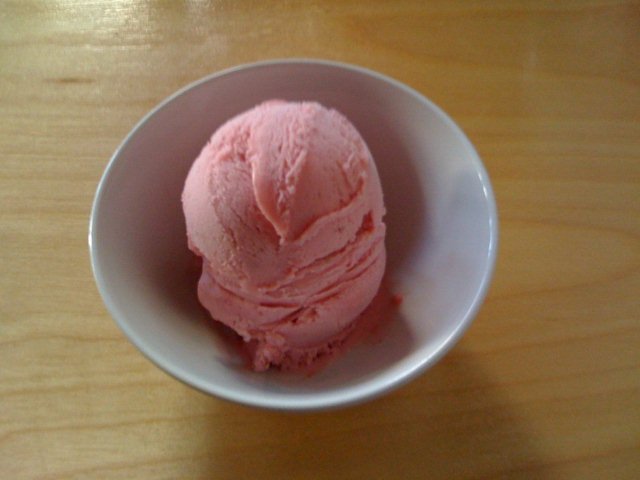
Before the nut butter there were many other dangerous things, but this one bares mentioning: fresh strawberry ice cream at Coquina in Ashland, Oregon. We'll eat fresh produce and get skinny, eh? What about if someone takes beautiful fresh berries and wraps them in all of their bright sweetness, into fresh cream and produces a stunning little ball of pink frozen goodness that tastes so dramatically different from those old strawberry-jam-flavored ice creams of the past...I mean, how could I resist? I don't even like ice cream (very much -- seriously!).


Ok, and then I discovered Patricia Wells's book Trattoria, which is totally amazing. It's like a crib list of all the magic tricks of simple Italian cooking. Last night: chicken with onions and red peppers. Imagine laquered, luxuriant ribbons of pepper and onions almost like filo dough layers and a broth infused with fresh herbs and chicken fat of course. And we had it over buttered-bowties, because were we going to waste the sauce? Remember, this was the part where *I* would have control because *I* was cooking? Ha!

If slimness is the goal, clearly we need a better plan. Except, we don't really want one.

Sunday, July 17, 2011

Maine Pau


I'm back. (Ta da!)

As we prepare for a year of perpetual motion, we're hiding out in a beautiful, remote spot on Maine's central coast. Supermarkets and restaurants are thin on the ground, so I've been preparing three meals a day, mostly American summer food: grilled steak and chicken, corn on the cob, tomato-basil-etc. salads.

This weekend, however, E's friend S (who is a great food person) came out for a visit and E declared that I would make Kung Pao chicken. I'm not even sure that Kung Pao is a real Chinese dish. Maybe it's one of those 1950s-era dishes that no one makes anymore, like chicken a la king. In any case, the version I make is adapted from Yan-kit So's Classic Chinese Cookbook and I know it like the back of my hand...using a gas stove, my own wok, and Chinese ingredients.

Can Kung Pao be made-in-Maine? I was not feeling optimistic. The local Hannaford 's "Asian food" section was a minute 1/4 of an aisle long and definitely did not include dried chilis. (S generously brought these from Boston). In the end I wound up making a whole bunch of dubious substitutions forgetting that all my staple ingredients are not staples here: I used canola oil instead of peanut oil, Planter's dry-roasted peanuts in a jar instead of fresh, plain peanuts, some unfamiliar looking "Oriental" chili sauce, and vermouth instead of Shaoxing wine. The worst substitution I confess was purely the result of poor planning...I had to use bouillon instead of chicken broth! Oy!

Did I mention the electric stove? Not ideal for stir frying. But actually, I think it was the ancient cast iron pan and the burner on the electric stove that goes nuclear when you leave it on too long that made this dish work. It was surprisingly tasty in the end. So yes, you can make Pau in Maine! Thank God.

S gave me a great Chipotle mayo recipe, so here is my adaptation of Yan-kit So's Pau recipe for her (the original is here):

KUNG POW! (serves 2 people with rice and a veggie dish)

Ingredients

1 large pan with tall sides (so the dish won't fly out as you're stir-frying)
2-3 tbsp peanut oil
1-1.25 lbs of chicken "fillet"
4 dried chilis, de-seeded & chopped (approx 1 tbsp)
4 cloves garlic, thinly sliced
8-12 thin slices ginger
1.5 tbsp Shaoxing wine (common stuff at Asian markets)
6-8 scallions (spring onions), cut into 1" segments
1/2 c lightly salted peanuts

Marinade
2/3 tsp salt
4 tsp light soy sauce (buy at an Asian market; it's thinner and saltier than "dark soy")
4 tsp Shaoxing wine
1.5 tsp cornstarch
1.5 tbsp egg white

Sauce
1 tbsp dark soy sauce (used for giving dishes a rich auburn color)
1-2 tbsp chili sauce (smooth bright red sauce with vinegar in it)
2 tsp rice vinegar
1.5 tsp corn starch
6 tbsp chicken broth (not too salty)

Instructions
Keep in mind that everything about this dish is dictated by the fact that you're going to cook it really quickly in a hot pan. I always have to get myself ready, as if I'm about to do a 5-min performance.

Step 1: Marinate chicken 15-20 mins

Cut chicken into uniform 1"-cubes/chunks so they'll cook evenly. I use "fillets" because they're a more uniform thickness than breasts. Put all of the marinade ingredients in a bowl and toss the chunks in it lightly with chopsticks. The egg whites help to make the chicken juicier.

Step 2: Prepare the sauce & set aside wine

You'll notice that the sauce and the marinade have a lot of the same ingredients. I prepare the sauce next so I can put the bottles away and not have them cluttering the counter. Measure out the 1.5 tbsp of wine for cooking now too and stick it in a ramekin (you don't want to be measuring when you're cooking). Leave a pair of chopsticks in the sauce so you can re-stir it quickly when you're cooking. Be prepared!

Step 3: De-seed and chop dried chilis

Slice length-wise, remove the seeds, then chop cross-wise into small pieces. Start with 1 tbsp chopped chilis and adjust in subsequent batches if you like it spicier. Stick chili pieces in a ramekin. Wash your hands (no, seriously).

Step 4: Slice garlic and ginger

Slice the garlic first, then slice the ginger into similar size/thickness slices. Volume-wise you should have 20-30% less ginger than garlic. Put both ingredients in one dish so you can add them quickly together.

Step 5: Wash, dry, cut, and separate the scallions

Make sure they're totally dry, otherwise they'll steam rather than fry. Cut into 1" segments to match the chicken chunks. Depending on how big the onions are, you may need to slice them lengthwise first so the pieces will cook quickly enough. Envision a smallish, tender little scallion and shoot for that thickness. Put the whites and greens in separate bowls.

Step 6: Toast the peanuts

Toast on a medium heat until you can see the oils start to glisten and the peanuts get a little brown.

Step 7: Get organized

Lay out your ingredients next to the stove in the order you will use them:

-- Oil
-- Chili
-- Garlic & ginger
-- Chicken
-- Shaoxing wine
-- White onion parts
-- Sauce
-- Green onion parts
-- Peanuts
-- Serving plate

Step 8: Cook!

-- Get your diners to the table.
-- Heat pan so it feels very warm when you hold your hand 5" above the surface.
-- Add oil to the center of the pan. Let it heat 5-10 seconds.
-- Add the chilis to the center of the oil and stir as they fry. They'll turn almost black in about 20 seconds.
-- Add the garlic and ginger quickly together. Stir until they get a little tender and you get a big whiff of their aroma (20-30 seconds). Yum!
-- Add the chicken and spread out so it covers the surface evenly. Then keep turning from the bottom so the pepper/garlic/ginger gets distributed. After that you can leave it to pan-fry a bit and pick up some brownness. After 2-3 mins of stir-frying all the pink should be gone.
-- Pour in the Shaoxing wine around the edges while you continue stir-frying the chicken. This deglazes the pan (5-10 secs).
-- Add the white onion parts. Distribute quickly in 2-3 stirs.
-- Clear a space in the center of the pan. Quickly re-stir the sauce and pour half of it into the center of the pan. Give it a couple of seconds to start thickening, then toss the chicken through it. Add the second half of the sauce the same way. Stir-fry until sauce is thickened and coats the chicken. (approx 1 min)
-- Add the green onion parts. Stiry fry until you see them wilt just slightly. (15-20 secs)
-- Add the peanuts. Distribute in 2-3 stirs and pour entire contents of pan immediately onto a plate. Bring the plate quickly to the table so your diners can enjoy the "wok hay". In my experience, the wok hay is gone within 2 mins. The dish will be much more delicious if you can get people to eat it immediately.

So that's it!

If you try it, let me know how it goes.

Bon appetite!