Showing posts with label cookbooks. Show all posts

Wednesday, August 31, 2011

Cookathon (thank you, Patricia Wells!)


48 hours remaining in Maine.

And it really looks like this outside -- the leaves are glittering in the sun, the little white houses are sitting under sweet, puffy clouds, the roads are empty, there is bird song everywhere... And here I am at the computer.

Life can be strange sometimes.

But here I am at the computer because I've been too busy cooking to blog.

The truth is I am not a very good cook. Or rather, I am a complete amateur. I don't know how to sharpen my knives properly, I've never made stock, I can't carve a chicken, and I'll take a guess at that unlabeled jar of herbs in the cupboard...thyme?

I've always loved food and I really enjoy cooking, but for most of my adult life I've had demanding jobs and lived alone. So weeknight cooking for me was: make a large quinoa salad with feta, green onions, and chickpeas (or some other vegetarian protein) that's nutritious and can be eaten for a few days. Or vegetarian tacos with a side of steamed collard greens. Healthy hippy food that tastes pretty good (in my estimation), but is far from gourmet.

Things are a bit different now.

When I first met E in SF he was eating out at least twice a day. The stove in his kitchen had apparently never been used and the only thing in his fridge was Vitamin Water and Amstel Light. And for him "eating out" didn't mean Lahore Karahi or Club Waziema (like it did for me), it meant places like SPQR or Town Hall on a weekday and places like Kokkari or Piperade on the weekend.

There has been much intense negotiation over food, as you can imagine! I come down heavily (and inflexibly) on the homemade and healthy side while he insists on restaurant-sophistication and variety at every meal. In the past two years we've both inched closer toward one another on that spectrum...

This summer I got right down to the nitty gritty of where our palates meet.

We spent two months in a remote spot in Maine as an experiment to see if we could actually live in a non-urban environment. Could I handle cooking three (E-worthy) meals every day? Could E weather my occasional lapses into hippy food with good humor? When we first got here, I was in a panic. Imagine every morning getting up and pulling a fresh-chive-and-goat-cheese-omelet-with-seeded-toast-fresh-local-butter-and-a-side-of-golden-plums-with-Maine-blueberries out of your pocket!
Ok, now what's for lunch? How about dinner?

Then my mom sent me Patricia Wells' cookbook Trattoria for my birthday (thank God!).


Everything in this book was something I could cook and E could eat:

Tonnarelli with Arugula, Tomatoes, and Shaved Parmesan (p.128)
Chicken with a Confit of Red Bell Peppers and Onions (p. 221 -- I blogged about this earlier)
Pungent Parsley Sauce (p. 260)
Ragu (made with sausage meat and hot pepper -- yum, p. 268)
Tomato and Bread Salad (p. 45)
Roasted Rosemary Potatoes (p. 54)
Seared and Roasted Tomatoes (with fresh thyme, p. 13)
Rigatoni with Meat and Celery Sauce (p. 112)
Tagliatelle with Porcini Mushroom Sauce (p. 148)
Swiss Chard and Parmesan Torte (p. 32)


The Swiss chard torte was a revelation for me. Simple, earthy, intensely-flavored, satisfying... It was food that bypassed my rational brain and spoke directly to my unconscious. Yeah, yeah, I know that sounds weird, but you know those crazy concoctions you get in restaurants that are designed to "wow" you with how creative and surprising and precariously assembled they are? That's food designed for your brain. This torte is cooked, not designed. And it speaks to you on a bodily level. To start with, the crust is simply...

1 cup flour
1/4 tsp salt
1/4 cup water
1/4 cup olive oil

Combine the flour and salt. Stir in the water, then the oil. Knead briefly and press into a tart tin.

It's not a fancy pastry crust. It has that heaviness or slight wetness that comes with olive oil or lard. It's slightly gritty, but a little flaky. Addictive.

The filling is uncomplicated too:

1 lb of Swiss chard or fresh spinach leaves
3 large eggs
1 cup freshly grated Parmesan
Salt and pepper to taste

You take the fresh leaves, chop them in a food processor, then wilt them in a large, shallow frying pan to get the liquid mostly evaporated. Combine the eggs and cheese, stir in the greens, adjust the seasoning (go ahead and taste the raw egg mixture and it's fine, nobody dies, just use good eggs), spoon the mixture into the tin, and bake at 375 for 45 mins or until the torte is lightly browned and firm to the touch.

Simple, simple, simple.

I made mine with flecks of raisin (one of her suggested variations) and spinach since that's what we had on hand. Also, I over-baked it, but even so -- it was so good. Even thought it's a typical Italian thing, it made me think of that amazing Tom Jones eating scene in the country inn ;-)

So after that, I decided to just go for it and ordered two of Wells's other books: Bistro Cooking and Vegetable Harvest.


I've just scratched the surface of these books, but already they've been hugely helpful.

From Bistro Cooking I tried the amazing Herb-Crusted Roast Chicken Pile ou Face (p. 171) where you paint the uncooked bird with egg yolk and press fresh herbs all over it. Somehow this seals the bird, locking in all of the fats and creating an amazingly chicken-y tasting result. Also, the Warm Potato Salad with Herbed Vinaigrette (p. 106) just captures that taste of French potato salad that's anchored in my gastronomic memory banks, whereas the versions I've found from the Food Network online or Epicurious just never tasted *right*.

From Vegetable Harvest I tried the elegant Potato Gratin from the Savoy (p. 222), in its entirety: Yukon gold potatoes, chicken stock, Gruyere, and fresh nutmeg. Awesome! Also, the very nice Artichoke and White Bean Dip (p. 19), again, simple and delicious when it was very fresh.

Beyond Wells's recipes, which are amazing for their simplicity, reliability, and awesome results, her Bistro Cooking intro articulates a philosophy of eating that both E and I love:

"In bistros, people don't whisper, they shout, and diners are on a first-name basis with the harried waitress wrapped in a frilly white apron."

"And in bistros, you will often find yourself chatting across tables with perfect strangers, sharing their platter of French fries while you wait for yours to come sizzling from the kitchen at the end of the room."

"Bistro food is not just a style of cooking but also a manner of presentation. Order terrine de campagne -- usually a rustic thick pate of ground pork and pork liver spiced with cognac and herbs -- and you are not served a thin slice on a plate. Rather the waitress offers the entire terrine, and you're meant to eat your fill. Order a roast chicken and a whole golden bird arrives tableside, to be carved in front of you."

"Bistro cuisine is French home cooking at its best, a style of cooking that demands a minimal of technical skills and does not require a professional collection of pots and pans. Ingredients aren't exotic; they come straight from the local market."

"What I love most about cooking and eating bistro food at home is its sense of generosity, of wholeness, of copiousness."

"Bistro fare is not afraid to be lusty and earthy, filling the air with wafts of pungent garlic or sweet bacon sizzling in a huge steel skillet, or the sweet caramel scent of a tarte Tatin about to be released from the oven."

I will say also, that something I've started to absorb from Wells's recipes as a whole is...to back off from over-complicating any single dish. This crystalized for me the other night as I was trying to invent a menu out of the ingredients I had on hand, and I considered recipes with chicken, sage, feta, rice, onions, carrots, etc. And then I realized each dish on the plate could do just one thing. So I shot for an herbal chicken (grilled with fresh Sage pesto), a mellow-sweet carrot rice casserole (with fresh nutmeg and a little honey), and a crunchy salad with a tangy-feta dressing. Instead of trying to jam herbal, sweet-mellow, and tangy into one dish, I spread them out across the meal and gave each experience some breathing room.


Also, this meal: so-called "Asian" roasted pork loin (salty-sweet-meaty-chewy), baby onions and thyme baked in parchment (diffused sweet-herbal-delicate), oven fries (earthy, finger-sized, peppery), and crunchy salad (acidic, hard-crunchy).


The execution wasn't perfect, but it was a good dinner, and there was a real inkling in there for me about how to be a better cook.

Thursday, July 28, 2011

Hey, Slim!


This is really not quite working out as planned.

What was the plan? Brilliant wishful thinking: upon our return to the States we will be visiting places like SF (where they have healthy-ish restaurant food), *I* will have control over our meals because I'm cooking, and we'll have access to great produce...all of which adds up to eating healthier and getting slim after 20 duck-fat-infused months in HK.

Eh, not quite.

The trouble started long before the nut butter. But let's talk about the nut butter... E's friend S-- has a little side business with an 80-something-year-old friend making two products, an outrageous pecan-almond-everything nut butter and an equally decadent dried cherry and sesame-encrusted cashew granola. They've discovered that if you mix the two products together the result is more addictive than heroin. The dopamine hit just from the texture alone, let alone the taste...well, let's just say the jar that S-- brought up up to Maine was quickly dispatched with a spoon.


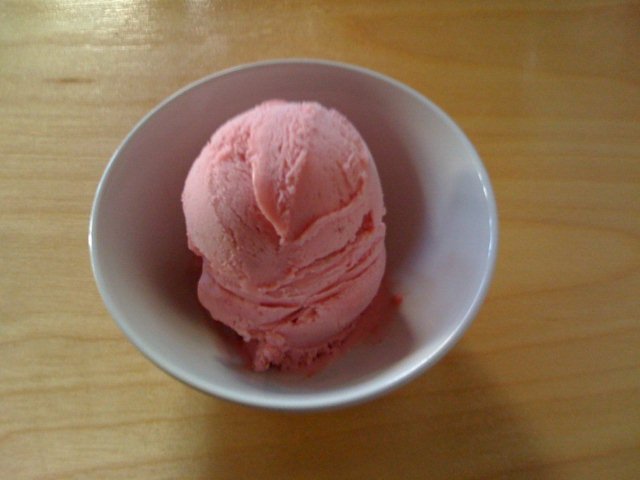
Before the nut butter there were many other dangerous things, but this one bares mentioning: fresh strawberry ice cream at Coquina in Ashland, Oregon. We'll eat fresh produce and get skinny, eh? What about if someone takes beautiful fresh berries and wraps them in all of their bright sweetness, into fresh cream and produces a stunning little ball of pink frozen goodness that tastes so dramatically different from those old strawberry-jam-flavored ice creams of the past...I mean, how could I resist? I don't even like ice cream (very much -- seriously!).


Ok, and then I discovered Patricia Wells's book Trattoria, which is totally amazing. It's like a crib list of all the magic tricks of simple Italian cooking. Last night: chicken with onions and red peppers. Imagine laquered, luxuriant ribbons of pepper and onions almost like filo dough layers and a broth infused with fresh herbs and chicken fat of course. And we had it over buttered-bowties, because were we going to waste the sauce? Remember, this was the part where *I* would have control because *I* was cooking? Ha!

If slimness is the goal, clearly we need a better plan. Except, we don't really want one.

Sunday, July 17, 2011

Maine Pau


I'm back. (Ta da!)

As we prepare for a year of perpetual motion, we're hiding out in a beautiful, remote spot on Maine's central coast. Supermarkets and restaurants are thin on the ground, so I've been preparing three meals a day, mostly American summer food: grilled steak and chicken, corn on the cob, tomato-basil-etc. salads.

This weekend, however, E's friend S (who is a great food person) came out for a visit and E declared that I would make Kung Pao chicken. I'm not even sure that Kung Pao is a real Chinese dish. Maybe it's one of those 1950s-era dishes that no one makes anymore, like chicken a la king. In any case, the version I make is adapted from Yan-kit So's Classic Chinese Cookbook and I know it like the back of my hand...using a gas stove, my own wok, and Chinese ingredients.

Can Kung Pao be made-in-Maine? I was not feeling optimistic. The local Hannaford 's "Asian food" section was a minute 1/4 of an aisle long and definitely did not include dried chilis. (S generously brought these from Boston). In the end I wound up making a whole bunch of dubious substitutions forgetting that all my staple ingredients are not staples here: I used canola oil instead of peanut oil, Planter's dry-roasted peanuts in a jar instead of fresh, plain peanuts, some unfamiliar looking "Oriental" chili sauce, and vermouth instead of Shaoxing wine. The worst substitution I confess was purely the result of poor planning...I had to use bouillon instead of chicken broth! Oy!

Did I mention the electric stove? Not ideal for stir frying. But actually, I think it was the ancient cast iron pan and the burner on the electric stove that goes nuclear when you leave it on too long that made this dish work. It was surprisingly tasty in the end. So yes, you can make Pau in Maine! Thank God.

S gave me a great Chipotle mayo recipe, so here is my adaptation of Yan-kit So's Pau recipe for her (the original is here):

KUNG POW! (serves 2 people with rice and a veggie dish)

Ingredients

1 large pan with tall sides (so the dish won't fly out as you're stir-frying)
2-3 tbsp peanut oil
1-1.25 lbs of chicken "fillet"
4 dried chilis, de-seeded & chopped (approx 1 tbsp)
4 cloves garlic, thinly sliced
8-12 thin slices ginger
1.5 tbsp Shaoxing wine (common stuff at Asian markets)
6-8 scallions (spring onions), cut into 1" segments
1/2 c lightly salted peanuts

Marinade
2/3 tsp salt
4 tsp light soy sauce (buy at an Asian market; it's thinner and saltier than "dark soy")
4 tsp Shaoxing wine
1.5 tsp cornstarch
1.5 tbsp egg white

Sauce
1 tbsp dark soy sauce (used for giving dishes a rich auburn color)
1-2 tbsp chili sauce (smooth bright red sauce with vinegar in it)
2 tsp rice vinegar
1.5 tsp corn starch
6 tbsp chicken broth (not too salty)

Instructions
Keep in mind that everything about this dish is dictated by the fact that you're going to cook it really quickly in a hot pan. I always have to get myself ready, as if I'm about to do a 5-min performance.

Step 1: Marinate chicken 15-20 mins

Cut chicken into uniform 1"-cubes/chunks so they'll cook evenly. I use "fillets" because they're a more uniform thickness than breasts. Put all of the marinade ingredients in a bowl and toss the chunks in it lightly with chopsticks. The egg whites help to make the chicken juicier.

Step 2: Prepare the sauce & set aside wine

You'll notice that the sauce and the marinade have a lot of the same ingredients. I prepare the sauce next so I can put the bottles away and not have them cluttering the counter. Measure out the 1.5 tbsp of wine for cooking now too and stick it in a ramekin (you don't want to be measuring when you're cooking). Leave a pair of chopsticks in the sauce so you can re-stir it quickly when you're cooking. Be prepared!

Step 3: De-seed and chop dried chilis

Slice length-wise, remove the seeds, then chop cross-wise into small pieces. Start with 1 tbsp chopped chilis and adjust in subsequent batches if you like it spicier. Stick chili pieces in a ramekin. Wash your hands (no, seriously).

Step 4: Slice garlic and ginger

Slice the garlic first, then slice the ginger into similar size/thickness slices. Volume-wise you should have 20-30% less ginger than garlic. Put both ingredients in one dish so you can add them quickly together.

Step 5: Wash, dry, cut, and separate the scallions

Make sure they're totally dry, otherwise they'll steam rather than fry. Cut into 1" segments to match the chicken chunks. Depending on how big the onions are, you may need to slice them lengthwise first so the pieces will cook quickly enough. Envision a smallish, tender little scallion and shoot for that thickness. Put the whites and greens in separate bowls.

Step 6: Toast the peanuts

Toast on a medium heat until you can see the oils start to glisten and the peanuts get a little brown.

Step 7: Get organized

Lay out your ingredients next to the stove in the order you will use them:

-- Oil
-- Chili
-- Garlic & ginger
-- Chicken
-- Shaoxing wine
-- White onion parts
-- Sauce
-- Green onion parts
-- Peanuts
-- Serving plate

Step 8: Cook!

-- Get your diners to the table.
-- Heat pan so it feels very warm when you hold your hand 5" above the surface.
-- Add oil to the center of the pan. Let it heat 5-10 seconds.
-- Add the chilis to the center of the oil and stir as they fry. They'll turn almost black in about 20 seconds.
-- Add the garlic and ginger quickly together. Stir until they get a little tender and you get a big whiff of their aroma (20-30 seconds). Yum!
-- Add the chicken and spread out so it covers the surface evenly. Then keep turning from the bottom so the pepper/garlic/ginger gets distributed. After that you can leave it to pan-fry a bit and pick up some brownness. After 2-3 mins of stir-frying all the pink should be gone.
-- Pour in the Shaoxing wine around the edges while you continue stir-frying the chicken. This deglazes the pan (5-10 secs).
-- Add the white onion parts. Distribute quickly in 2-3 stirs.
-- Clear a space in the center of the pan. Quickly re-stir the sauce and pour half of it into the center of the pan. Give it a couple of seconds to start thickening, then toss the chicken through it. Add the second half of the sauce the same way. Stir-fry until sauce is thickened and coats the chicken. (approx 1 min)
-- Add the green onion parts. Stiry fry until you see them wilt just slightly. (15-20 secs)
-- Add the peanuts. Distribute in 2-3 stirs and pour entire contents of pan immediately onto a plate. Bring the plate quickly to the table so your diners can enjoy the "wok hay". In my experience, the wok hay is gone within 2 mins. The dish will be much more delicious if you can get people to eat it immediately.

So that's it!

If you try it, let me know how it goes.

Bon appetite!

Tuesday, September 7, 2010

Crossing the (texture) line

The other night I was sweet-talking E, baby-babying him, massaging his shoulders. How on earth was I going to persuade him?

"Sweetheart..." (maybe not such a smart starting point).

"Yeeesss?"

"I want to...ask you for something."

Raised eyebrows.

"I was wondering if you'd be willing to...um...expand your palate?"

He gives me a you-gotta-be-kidding-me kind of look. To start out with, he *will* eat some weird things, like preserved beancurd, which is sharp, gooey, intense, and totally amazing. But in general when it comes to lung or windpipe or intestine -- or just snake -- he digs in his heels. I'll bet you're digging in your heels right now too!

This is an impediment to my aspirations to become a Chinese gourmet, since he and I eat the majority of our meals together. Vast swaths of menu go untouched.

I think most Westerners feel confused about Chinese food. On the one hand, they've usually eaten some delicious dishes -- like Kung Pao Chicken. But they've also come into contact with Chinese dishes that totally freak them out. For example, one of my family members recalls a meal with what they describe as "Assassinated Chicken" and "Duck and What Duck Eats."

I think most Westerners understand that China is a serious food culture, but they wonder whether they've really had good Chinese food. Because, well, is it supposed to be rubbery and pokey and gristly like this?

Right now I'm reading Fuchsia Dunlop's memoir Shark's Fin and Sichuan Pepper: A Sweet-Sour Memoir of Eating in China. She's a smarty-pants English girl who got a scholarship to study in China, dropped out of her classes and fell head-over-heals in love with Sichuan food. She even trained as a Chinese professional chef at the Sichuan Institute of Higher Cuisine.

In her memoir, Fuchsia directly addresses this gastronomic line in the sand that few Westerners cross. She nails it so completely, I'm going to quote essential passages and hope you enjoy:

"Texture is the last frontier for Westerners learning to appreciate Chinese food. Cross it, and you're really inside."

"Most Westerners are only willing to grapple with something if it is particularly delicious. Anyone in their right mind, surely, would agree that lobsters are worth a bit of grapple, but shell-on prawns? It's a matter of opinion."

"Fiddling around with a bony fowl's neck for the sake of a few wisps of silky meat, as the Chinese do, or working your way through a pile of small husky melon seeds, seems like a crazy waste of time and effort."

"[Foodies] have no difficulties with the middle ground of Chinese eating, and may enjoy, as the Chinese do, the struggles to extract and separate. Yet it takes several years of quite dedicated Chinese eating, in my experience to begin to appreciate texture for itself. And that is what you must do if you wish to become a Chinese gourmet, because many of the grandest Chinese delicacies, not to mention many of the most exquisite pleasures of everyday Chinese eating, are essentially about texture."

"Certain textures are especially prized. Cui, for example, denotes a particular quality of crispness that is found in fresh crunchy vegetables, blanched pig's kidneys, and goose intestines, not to mention sea cucumbers that have been properly cooked. Cui crispness offers resistance to the teeth, but finally yields, cleanly, with a pleasant snappy feeling. It is distinct from su, which is the dry, fragile, fall-apart crispness of deep-fried duck skin or taro dumplings. Some foods, like the skin of a barbecued suckling pig, can be described as su cui because they offer both types of crispness, simultaneously."

(Quotes from p. 136-138 of Fuchsia's book.)

I am so inspired by this, I can't tell you! I aspire to develop this kind of gastronomic awareness and discernment. If I can develop this awareness in the Chinese gastronomic realm, will it change how I experience Spanish, Italian, French cuisine? Will I be able to bring more nuance and deliciousness to all of my cooking?

I absolutely want to find out. So this blog post is a plea to my sweetie to please-oh-please come chew goose intestines with me... I promise it will be worth it.

Sunday, August 22, 2010

Wok ritual


In 2006 I went to an exhibition at the Museum of the African Diaspora (MoAD) in San Francisco featuring artworks made by African slaves in America.

There were exquisite quilts with repeating patterns (similar to the one above) and also recordings of songs with lots of repetition. Something about the rhythmic-ness of it all suddenly struck me as being not particularly African but instead fundamentally about suffering.

When people are in deep emotional pain they sometimes keen, or rock back and forth, to comfort themselves. There is a way in which rhythm and predictability are soothing.

I wondered, Would people from a different continent have turned to the rhythms and patterns from their culture to cope as well? The patterns were clearly African patterns, but the fact that the art work was patterned or rhythmic may have had more to do with the *circumstances* than with the slaves' ethnicity. Maybe.

What does this have to do with Chinese food?

Last week I bought a
wok and E asked me, "So, are you becoming Chinese?"

Of course not. One does not become Chinese. Neither is my desire to use a wok motivated by Sinophilia. A wok is simply the best tool for cooking the freshest produce available to me. There are many more (Chinese) stir-fry recipes for angled loofas and bitter melons than there are Western ones. Does the analogy make sense? I'm not trying to be Chinese, I'm trying to cook fresh food (while in China).

So, I bought a beautiful Japanese (ha!) carbon steel wok. At least I think I did -- had to count on the 20-something shop attendant to translate for me. If you can read the label below, please let me know what it says...


As soon as I saw the wok I felt deep affection for it. I love the idea of a wok. You may already know, but...you don't get a good wok by spending lots of money. A good wok is like a cast-iron pan: the initial product is cheap ($6-$40 USD), but
what makes it a fantastic tool is years of regular use.

Eventually the surface takes on a brown-black patina that is naturally non-stick (or low-stick) and imparts a recognizable wok-flavor to food. It also gives off a little wisp of smoke when it is hot. Grace Young (from SF, by the way) has written extensively about woks in her Breath of a Wok and Stir-Frying to the Sky's Edge cookbooks. A picture of Young's wok (next to two other young woks) below, courtesy of Culinate:


So, you season a w
ok by either baking oil onto its surface in a hot oven or over a hot flame. When this is done, traditionalists (ahem) "open the wok" by stir-frying Chinese chives, spring onions, or yellow onions, and ginger, and sometimes pork fat, in order to remove the "metal" taste from of the wok.


I love this ritual. It's like you are baptizing the wok or breathing life into it with these foundational seasonings. Teaching it a few basic words before it learns to speak. Out of respect for my wok, I didn't use the wilted spring onions and shriveled ginger hunkered down in my refrigerator. Instead I went out to the markets and bought a beautiful, robust chunk of ginger and some feisty spring onions. Then I opened
my wok...


Friday, August 13, 2010

By the book (Yan-kit So's book)

"Maybe you should relax..." my friend C-- says, her voice trailing off uncertainly.

Perfectionist that I am, I've learned over the years that this is code for "Your intensity is freaking me out, lady."

I've been describing, over a dinner of vegetarian Shanghainese at Kung Tak Lam, how I've been meticulously following recipes from Yan-kit's Classic Chinese Cookbook:


I carefully selected this book after pouring over dozens of others at PageOne bookstore, a statusy megaplex of books in the massive megaplex of retail that is Harbour City shopping mall in TST.


This book stood out from the others because if
its detailed instructions on the ingredients, techniques, and traditions that make up Chinese cuisine. With photographs...including one showing a very proper-looking lady balancing a rice bowl on her lower lip.

So, in my efforts to propel myself out of a sink-hole of culture shock, I've been throwing myself at her recipes with the full force of my perfectionism. If I can't learn to speak the d*** language at the very least I will become fluent in the food. And, as with most things, I believe that the fast track to literacy isn't just memorizing by rote (or eating in this case) -- it's constructing my own sentences (cooking the dishes myself).

So...the moment of great intensity. After learning my way around Yan-kit's Kung Pao Chicken and Hoisin Chicken, I've learned that her dainty recipes need to be doubled to feed our American appetites.

Now, I am embarking
on Willow Chicken, which is long and skinny, rather than square and chunky. As I stand poised with my rice cooking, greens prepped, everything in bowls in the order they'll be stir-fried, only the garlic left to chop...

I read that I will not be chopping. Instead, I'll be turning 6 (x
2 = 12) garlic cloves into "silken threads," which entails carefully slicing into thin chips and then again into miniature matchsticks. I am a slow cook -- defrocking 12 cloves and turning them into silken threads is not a two-minute enterprise. F***.


But I do turn garlic into silk because, while C-- may think I'm nuts I believe that Yan-kit So would appreciate my interest in creating the perfect textures and mouth-feel of a medley of long and slender ingredients rather than a mish-mash of cubes and strips and spheres.

(I hope she will also appreciate that I pulled
a measuring tool out of my sewing kit to ensure that my 1/5" strips of chicken were exactly that.)