Showing posts with label cooking. Show all posts

Wednesday, August 31, 2011

Cookathon (thank you, Patricia Wells!)


48 hours remaining in Maine.

And it really looks like this outside -- the leaves are glittering in the sun, the little white houses are sitting under sweet, puffy clouds, the roads are empty, there is bird song everywhere... And here I am at the computer.

Life can be strange sometimes.

But here I am at the computer because I've been too busy cooking to blog.

The truth is I am not a very good cook. Or rather, I am a complete amateur. I don't know how to sharpen my knives properly, I've never made stock, I can't carve a chicken, and I'll take a guess at that unlabeled jar of herbs in the cupboard...thyme?

I've always loved food and I really enjoy cooking, but for most of my adult life I've had demanding jobs and lived alone. So weeknight cooking for me was: make a large quinoa salad with feta, green onions, and chickpeas (or some other vegetarian protein) that's nutritious and can be eaten for a few days. Or vegetarian tacos with a side of steamed collard greens. Healthy hippy food that tastes pretty good (in my estimation), but is far from gourmet.

Things are a bit different now.

When I first met E in SF he was eating out at least twice a day. The stove in his kitchen had apparently never been used and the only thing in his fridge was Vitamin Water and Amstel Light. And for him "eating out" didn't mean Lahore Karahi or Club Waziema (like it did for me), it meant places like SPQR or Town Hall on a weekday and places like Kokkari or Piperade on the weekend.

There has been much intense negotiation over food, as you can imagine! I come down heavily (and inflexibly) on the homemade and healthy side while he insists on restaurant-sophistication and variety at every meal. In the past two years we've both inched closer toward one another on that spectrum...

This summer I got right down to the nitty gritty of where our palates meet.

We spent two months in a remote spot in Maine as an experiment to see if we could actually live in a non-urban environment. Could I handle cooking three (E-worthy) meals every day? Could E weather my occasional lapses into hippy food with good humor? When we first got here, I was in a panic. Imagine every morning getting up and pulling a fresh-chive-and-goat-cheese-omelet-with-seeded-toast-fresh-local-butter-and-a-side-of-golden-plums-with-Maine-blueberries out of your pocket!
Ok, now what's for lunch? How about dinner?

Then my mom sent me Patricia Wells' cookbook Trattoria for my birthday (thank God!).


Everything in this book was something I could cook and E could eat:

Tonnarelli with Arugula, Tomatoes, and Shaved Parmesan (p.128)
Chicken with a Confit of Red Bell Peppers and Onions (p. 221 -- I blogged about this earlier)
Pungent Parsley Sauce (p. 260)
Ragu (made with sausage meat and hot pepper -- yum, p. 268)
Tomato and Bread Salad (p. 45)
Roasted Rosemary Potatoes (p. 54)
Seared and Roasted Tomatoes (with fresh thyme, p. 13)
Rigatoni with Meat and Celery Sauce (p. 112)
Tagliatelle with Porcini Mushroom Sauce (p. 148)
Swiss Chard and Parmesan Torte (p. 32)


The Swiss chard torte was a revelation for me. Simple, earthy, intensely-flavored, satisfying... It was food that bypassed my rational brain and spoke directly to my unconscious. Yeah, yeah, I know that sounds weird, but you know those crazy concoctions you get in restaurants that are designed to "wow" you with how creative and surprising and precariously assembled they are? That's food designed for your brain. This torte is cooked, not designed. And it speaks to you on a bodily level. To start with, the crust is simply...

1 cup flour
1/4 tsp salt
1/4 cup water
1/4 cup olive oil

Combine the flour and salt. Stir in the water, then the oil. Knead briefly and press into a tart tin.

It's not a fancy pastry crust. It has that heaviness or slight wetness that comes with olive oil or lard. It's slightly gritty, but a little flaky. Addictive.

The filling is uncomplicated too:

1 lb of Swiss chard or fresh spinach leaves
3 large eggs
1 cup freshly grated Parmesan
Salt and pepper to taste

You take the fresh leaves, chop them in a food processor, then wilt them in a large, shallow frying pan to get the liquid mostly evaporated. Combine the eggs and cheese, stir in the greens, adjust the seasoning (go ahead and taste the raw egg mixture and it's fine, nobody dies, just use good eggs), spoon the mixture into the tin, and bake at 375 for 45 mins or until the torte is lightly browned and firm to the touch.

Simple, simple, simple.

I made mine with flecks of raisin (one of her suggested variations) and spinach since that's what we had on hand. Also, I over-baked it, but even so -- it was so good. Even thought it's a typical Italian thing, it made me think of that amazing Tom Jones eating scene in the country inn ;-)

So after that, I decided to just go for it and ordered two of Wells's other books: Bistro Cooking and Vegetable Harvest.


I've just scratched the surface of these books, but already they've been hugely helpful.

From Bistro Cooking I tried the amazing Herb-Crusted Roast Chicken Pile ou Face (p. 171) where you paint the uncooked bird with egg yolk and press fresh herbs all over it. Somehow this seals the bird, locking in all of the fats and creating an amazingly chicken-y tasting result. Also, the Warm Potato Salad with Herbed Vinaigrette (p. 106) just captures that taste of French potato salad that's anchored in my gastronomic memory banks, whereas the versions I've found from the Food Network online or Epicurious just never tasted *right*.

From Vegetable Harvest I tried the elegant Potato Gratin from the Savoy (p. 222), in its entirety: Yukon gold potatoes, chicken stock, Gruyere, and fresh nutmeg. Awesome! Also, the very nice Artichoke and White Bean Dip (p. 19), again, simple and delicious when it was very fresh.

Beyond Wells's recipes, which are amazing for their simplicity, reliability, and awesome results, her Bistro Cooking intro articulates a philosophy of eating that both E and I love:

"In bistros, people don't whisper, they shout, and diners are on a first-name basis with the harried waitress wrapped in a frilly white apron."

"And in bistros, you will often find yourself chatting across tables with perfect strangers, sharing their platter of French fries while you wait for yours to come sizzling from the kitchen at the end of the room."

"Bistro food is not just a style of cooking but also a manner of presentation. Order terrine de campagne -- usually a rustic thick pate of ground pork and pork liver spiced with cognac and herbs -- and you are not served a thin slice on a plate. Rather the waitress offers the entire terrine, and you're meant to eat your fill. Order a roast chicken and a whole golden bird arrives tableside, to be carved in front of you."

"Bistro cuisine is French home cooking at its best, a style of cooking that demands a minimal of technical skills and does not require a professional collection of pots and pans. Ingredients aren't exotic; they come straight from the local market."

"What I love most about cooking and eating bistro food at home is its sense of generosity, of wholeness, of copiousness."

"Bistro fare is not afraid to be lusty and earthy, filling the air with wafts of pungent garlic or sweet bacon sizzling in a huge steel skillet, or the sweet caramel scent of a tarte Tatin about to be released from the oven."

I will say also, that something I've started to absorb from Wells's recipes as a whole is...to back off from over-complicating any single dish. This crystalized for me the other night as I was trying to invent a menu out of the ingredients I had on hand, and I considered recipes with chicken, sage, feta, rice, onions, carrots, etc. And then I realized each dish on the plate could do just one thing. So I shot for an herbal chicken (grilled with fresh Sage pesto), a mellow-sweet carrot rice casserole (with fresh nutmeg and a little honey), and a crunchy salad with a tangy-feta dressing. Instead of trying to jam herbal, sweet-mellow, and tangy into one dish, I spread them out across the meal and gave each experience some breathing room.


Also, this meal: so-called "Asian" roasted pork loin (salty-sweet-meaty-chewy), baby onions and thyme baked in parchment (diffused sweet-herbal-delicate), oven fries (earthy, finger-sized, peppery), and crunchy salad (acidic, hard-crunchy).


The execution wasn't perfect, but it was a good dinner, and there was a real inkling in there for me about how to be a better cook.

Thursday, July 28, 2011

Hey, Slim!


This is really not quite working out as planned.

What was the plan? Brilliant wishful thinking: upon our return to the States we will be visiting places like SF (where they have healthy-ish restaurant food), *I* will have control over our meals because I'm cooking, and we'll have access to great produce...all of which adds up to eating healthier and getting slim after 20 duck-fat-infused months in HK.

Eh, not quite.

The trouble started long before the nut butter. But let's talk about the nut butter... E's friend S-- has a little side business with an 80-something-year-old friend making two products, an outrageous pecan-almond-everything nut butter and an equally decadent dried cherry and sesame-encrusted cashew granola. They've discovered that if you mix the two products together the result is more addictive than heroin. The dopamine hit just from the texture alone, let alone the taste...well, let's just say the jar that S-- brought up up to Maine was quickly dispatched with a spoon.


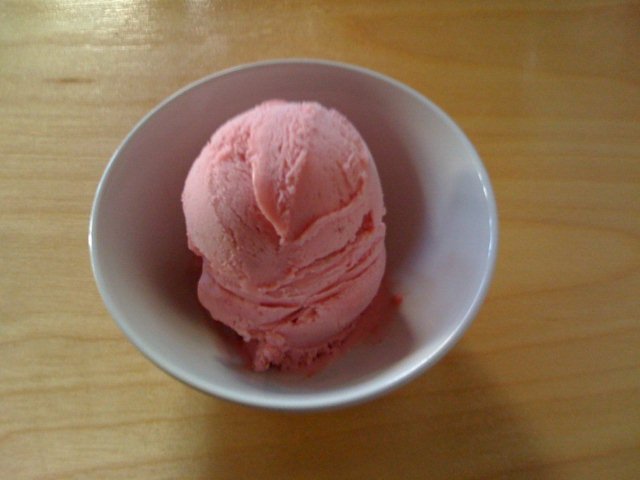
Before the nut butter there were many other dangerous things, but this one bares mentioning: fresh strawberry ice cream at Coquina in Ashland, Oregon. We'll eat fresh produce and get skinny, eh? What about if someone takes beautiful fresh berries and wraps them in all of their bright sweetness, into fresh cream and produces a stunning little ball of pink frozen goodness that tastes so dramatically different from those old strawberry-jam-flavored ice creams of the past...I mean, how could I resist? I don't even like ice cream (very much -- seriously!).


Ok, and then I discovered Patricia Wells's book Trattoria, which is totally amazing. It's like a crib list of all the magic tricks of simple Italian cooking. Last night: chicken with onions and red peppers. Imagine laquered, luxuriant ribbons of pepper and onions almost like filo dough layers and a broth infused with fresh herbs and chicken fat of course. And we had it over buttered-bowties, because were we going to waste the sauce? Remember, this was the part where *I* would have control because *I* was cooking? Ha!

If slimness is the goal, clearly we need a better plan. Except, we don't really want one.

Sunday, July 17, 2011

Maine Pau


I'm back. (Ta da!)

As we prepare for a year of perpetual motion, we're hiding out in a beautiful, remote spot on Maine's central coast. Supermarkets and restaurants are thin on the ground, so I've been preparing three meals a day, mostly American summer food: grilled steak and chicken, corn on the cob, tomato-basil-etc. salads.

This weekend, however, E's friend S (who is a great food person) came out for a visit and E declared that I would make Kung Pao chicken. I'm not even sure that Kung Pao is a real Chinese dish. Maybe it's one of those 1950s-era dishes that no one makes anymore, like chicken a la king. In any case, the version I make is adapted from Yan-kit So's Classic Chinese Cookbook and I know it like the back of my hand...using a gas stove, my own wok, and Chinese ingredients.

Can Kung Pao be made-in-Maine? I was not feeling optimistic. The local Hannaford 's "Asian food" section was a minute 1/4 of an aisle long and definitely did not include dried chilis. (S generously brought these from Boston). In the end I wound up making a whole bunch of dubious substitutions forgetting that all my staple ingredients are not staples here: I used canola oil instead of peanut oil, Planter's dry-roasted peanuts in a jar instead of fresh, plain peanuts, some unfamiliar looking "Oriental" chili sauce, and vermouth instead of Shaoxing wine. The worst substitution I confess was purely the result of poor planning...I had to use bouillon instead of chicken broth! Oy!

Did I mention the electric stove? Not ideal for stir frying. But actually, I think it was the ancient cast iron pan and the burner on the electric stove that goes nuclear when you leave it on too long that made this dish work. It was surprisingly tasty in the end. So yes, you can make Pau in Maine! Thank God.

S gave me a great Chipotle mayo recipe, so here is my adaptation of Yan-kit So's Pau recipe for her (the original is here):

KUNG POW! (serves 2 people with rice and a veggie dish)

Ingredients

1 large pan with tall sides (so the dish won't fly out as you're stir-frying)
2-3 tbsp peanut oil
1-1.25 lbs of chicken "fillet"
4 dried chilis, de-seeded & chopped (approx 1 tbsp)
4 cloves garlic, thinly sliced
8-12 thin slices ginger
1.5 tbsp Shaoxing wine (common stuff at Asian markets)
6-8 scallions (spring onions), cut into 1" segments
1/2 c lightly salted peanuts

Marinade
2/3 tsp salt
4 tsp light soy sauce (buy at an Asian market; it's thinner and saltier than "dark soy")
4 tsp Shaoxing wine
1.5 tsp cornstarch
1.5 tbsp egg white

Sauce
1 tbsp dark soy sauce (used for giving dishes a rich auburn color)
1-2 tbsp chili sauce (smooth bright red sauce with vinegar in it)
2 tsp rice vinegar
1.5 tsp corn starch
6 tbsp chicken broth (not too salty)

Instructions
Keep in mind that everything about this dish is dictated by the fact that you're going to cook it really quickly in a hot pan. I always have to get myself ready, as if I'm about to do a 5-min performance.

Step 1: Marinate chicken 15-20 mins

Cut chicken into uniform 1"-cubes/chunks so they'll cook evenly. I use "fillets" because they're a more uniform thickness than breasts. Put all of the marinade ingredients in a bowl and toss the chunks in it lightly with chopsticks. The egg whites help to make the chicken juicier.

Step 2: Prepare the sauce & set aside wine

You'll notice that the sauce and the marinade have a lot of the same ingredients. I prepare the sauce next so I can put the bottles away and not have them cluttering the counter. Measure out the 1.5 tbsp of wine for cooking now too and stick it in a ramekin (you don't want to be measuring when you're cooking). Leave a pair of chopsticks in the sauce so you can re-stir it quickly when you're cooking. Be prepared!

Step 3: De-seed and chop dried chilis

Slice length-wise, remove the seeds, then chop cross-wise into small pieces. Start with 1 tbsp chopped chilis and adjust in subsequent batches if you like it spicier. Stick chili pieces in a ramekin. Wash your hands (no, seriously).

Step 4: Slice garlic and ginger

Slice the garlic first, then slice the ginger into similar size/thickness slices. Volume-wise you should have 20-30% less ginger than garlic. Put both ingredients in one dish so you can add them quickly together.

Step 5: Wash, dry, cut, and separate the scallions

Make sure they're totally dry, otherwise they'll steam rather than fry. Cut into 1" segments to match the chicken chunks. Depending on how big the onions are, you may need to slice them lengthwise first so the pieces will cook quickly enough. Envision a smallish, tender little scallion and shoot for that thickness. Put the whites and greens in separate bowls.

Step 6: Toast the peanuts

Toast on a medium heat until you can see the oils start to glisten and the peanuts get a little brown.

Step 7: Get organized

Lay out your ingredients next to the stove in the order you will use them:

-- Oil
-- Chili
-- Garlic & ginger
-- Chicken
-- Shaoxing wine
-- White onion parts
-- Sauce
-- Green onion parts
-- Peanuts
-- Serving plate

Step 8: Cook!

-- Get your diners to the table.
-- Heat pan so it feels very warm when you hold your hand 5" above the surface.
-- Add oil to the center of the pan. Let it heat 5-10 seconds.
-- Add the chilis to the center of the oil and stir as they fry. They'll turn almost black in about 20 seconds.
-- Add the garlic and ginger quickly together. Stir until they get a little tender and you get a big whiff of their aroma (20-30 seconds). Yum!
-- Add the chicken and spread out so it covers the surface evenly. Then keep turning from the bottom so the pepper/garlic/ginger gets distributed. After that you can leave it to pan-fry a bit and pick up some brownness. After 2-3 mins of stir-frying all the pink should be gone.
-- Pour in the Shaoxing wine around the edges while you continue stir-frying the chicken. This deglazes the pan (5-10 secs).
-- Add the white onion parts. Distribute quickly in 2-3 stirs.
-- Clear a space in the center of the pan. Quickly re-stir the sauce and pour half of it into the center of the pan. Give it a couple of seconds to start thickening, then toss the chicken through it. Add the second half of the sauce the same way. Stir-fry until sauce is thickened and coats the chicken. (approx 1 min)
-- Add the green onion parts. Stiry fry until you see them wilt just slightly. (15-20 secs)
-- Add the peanuts. Distribute in 2-3 stirs and pour entire contents of pan immediately onto a plate. Bring the plate quickly to the table so your diners can enjoy the "wok hay". In my experience, the wok hay is gone within 2 mins. The dish will be much more delicious if you can get people to eat it immediately.

So that's it!

If you try it, let me know how it goes.

Bon appetite!

Wednesday, March 16, 2011

Dead or alive

E has been requesting shrimp for months. Not two or three months. More like ten to twelve. But I, a nearly 5'10"-tall human being, have been afraid of 3"-tall crustaceans...


My problem is that seafood in Hong Kong is very fresh. If you walk through the wet markets, fish fling themselves out of fish mongers' buckets onto the pavement. And in front of every decent seafood restaurant there is a large tank filled with garoupas, sullen lobsters, and shrimp with frantic little legs.

Living in a city like this, I would feel embarrassed -- or even negligent -- buying dead shrimp for my sweetheart. But the thought of personally ending the lives of 20 or more little beings was very daunting. Finally, finally, finally, I plucked up the courage. Actually, first I skulked around the supermarket for a while trying to think of anything we might possibly need that I could buy first. But finally I made my way up to the seafood counter and gave a death sentence to a catty (1.4 lbs) of white-legged Chinese shrimp.

And then...I had a bag of living things. It's weird to carry a grocery basket that has things moving in it. They were kicking intermittently, with some feistiness.

Then I paid for my living creatures and hoping to give them the opportunity to die on their own, I waited for the 56 bus and rode home with them on my lap. Ugh.

By the time they were spilled out on my kitchen counter, there were just flickers of motion. I needed to stir-fry them and I didn't know how to get from a living creature to the raw ingredient for my recipe. "How do I kill them?" I asked the young man at the seafood counter. Apparently you can stick them in the freezer for a while -- not enough to freeze the meat, but enough to effectively put them to sleep.

After 20 minutes in the freezer they weren't moving anymore, but they sure looked vibrant, vital, something. You know when you just have a feeling that something's alive but you can't say why? Ugh.

Anyway, what was I going to do? I didn't want to freeze the shrimp entirely, otherwise what was the point of buying fresh? So...I began to decapitate them. Whack -- off with the head. Whack -- the tail. Then I ran a knife over the little feet, separating them from the body so I could get a grip on the edge of the shell and pull it off. Over and over.

Finally I found myself with a tiny pile of beautiful shrimp meat and an enormous pile of gray shrimp parts. It was an interesting moment. I had gone from living creatures with beady eyes and speedy legs to...well, to food. And the meat had a certain quality, an almost silkiness or slinkiness to the way it moved. If you touched it, it would sort of shimmy back into place.

A while back there was a trend among young hipster foodies in the States to face the bloody reality of eating meat. Maybe this has something to do with Buddhism. I don't know. At my friend K--'s wedding in Oregon, for example, they served a pig roasted on a spit and carved on site, a gory carcass with its side missing displayed for all to witness.


(Don't have a picture of that pig, but this photo captures that witness-the-gruesomeness-of-meat spirit.)

I assure you that this is *not* my motivation for telling you the shrimp story.

The point of my shrimp story was that I witnessed first-hand the connection between life and freshness.

Since coming to HK I've asked a number of people to describe Cantonese cuisine. Invariably, they all talk about freshness. Cantonese like their food very fresh. This was surprising to me because, being a Californian, I always thought that we liked our food very fresh. And yet, Cantonese food and "California cuisine" are very different. 


To me, the freshness in California cuisine often refers to rawness, and specifically to raw vegetables. When I think of California cuisine, I think of an elegant salad of peppery greens I once had at Chez Panisse in Berkeley, that came from their own organic garden.


Cantonese food does not have raw vegetables. What is prized is a quality of freshness in cooked food.

Before coming to HK, I probably thought (unconsciously) about freshness as a spectrum starting from when the vegetable is freshest, still hanging on the vine; becoming less fresh after it's been picked and transported; less fresh still when it's handled and prepared for cooking; and finally becoming pretty dead when you cook it.

Now, I think differently.

After being in HK about six months, I went home to SF and ate at all good restaurants...but my impression was, Jeez, these people can't cook ;-( The food seemed dull and lifeless.

At any decent restaurant in HK, the food comes to the table piping hot, just out of the wok or the steamer. And really, you can forget about any sequencing of dishes. As soon as a dish is ready, they bring it to you. Incidentally, this was a gigantic source of frustration to E, who is very attached to the idea of a meal as a specific sequence of events (appetizer--soup--main--dessert). If a dish came in the wrong order, he would let it sit on the table and get cold until the correct dish in the sequence arrived. A misapplication of engineering instincts, if you ask me!

But if you eat the food as soon as it arrives, it's amazing. It's as if all the ingredients have simultaneously woken up and are opening to you like a rose blooming and releasing a fragrance. And if everything has been cooked perfectly and is in balance, it's like hearing a chord or a harmony in music. It's really lovely.

I don't think that most "Westerners" (or maybe just most Americans) even know to look for this quality of freshness in their cooked food. The Chinese, of course, (or maybe just the Cantonese) not only know to look for this freshness, they actually have a phrase to describe it: wok hay.

To quote Grace Young from The Wisdom of the Chinese Kitchen:

"Wok hay is not simply hot food; it's that elusive seared taste that only lasts for a minute or two."

"I always imagined wok hay as a special life force that, when consumed, provided us with extra energy, hay. Some readers may be familiar with the Mandarin word for hay, which is qi, as in qigong. Qi (pronounced "chee) is the Chinese concept of vital energy that flows through the body."

"As a child I clearly understood that when dinner was announced there was no excuse for tardiness. It was totally unacceptable to explain that you wanted to see the last five minutes of a television show, finish a phone conversation, or even do a few more minutes of homework. Hot food was serious business, and the idea of missing the wok hay was unthinkable."
(quotes from p. 20-21 of Young's book)

I usually cook dinner four or five nights a week, and most of those meals I cook in my wok. I've been doing this just over a year. And after regularly following recipes that go something like -- put the garlic in and let it sizzle about 15 seconds; add ingredient X and stir fry 30 seconds; add two tablespoons water and cover for 10 seconds, etc. -- I've gotten an intuitive sense of the delicacy and elusiveness of the hay.

Which is why it would drive me absolutely bonkers when -- after I had carefully shredded ingredients into delicate slivers for two hours and then brought the attention of a fighter pilot to hitting them with the perfect amount of heat for just the right amount of time in my wok and then rushed the steaming plate to the table -- E would finish his email, stand up, stretch, go to the bathroom, get a glass of wine, and finally sit down to the beautiful dish of food that had just lost its hay. Argh.

So finally, I did an experiment...

I prepped two identical sets of ingredients for Willow Chicken with Black Bean Sauce from Yan-kit's Classic Chinese Cookbook.


Then I cooked one set and we had dinner (yum!), but I kept a bit of the dish aside. After we ate, I cooked the other set of ingredients and placed the fresh, hot version on the counter next to the leftover version from 30 minutes ago. Then I asked E to come running and taste the two.

Ha! He didn't even want to touch the cool dish he was so transfixed by the fresh one. So, as he stood there eating the hot food, I took a bite of one, and then a bite of the other. And then I tasted the individual elements of one and those of the other. Here is what I found...


Color -- the difference in color was very apparent. Not only was the green of the peppers, chilis, and spring onions brighter in the freshly-cooked dish, but the chicken itself was brighter or lighter and also a bit pinker or yellower. So the dish actually looked more lit up. And it's really interesting...if you think about the way that broccoli or green pepper becomes brighter green when you cook it...it's almost as if it becomes more alive when you cook it. It's like the heat from the wok wakes it up, prompts it to open itself and display its most lovely qualities. A very different idea from thinking of cooking as making food another step more dead. Do you see what I mean?

Warmth and aroma -- when you took a bite of the fresh dish, the steam coming off the fresh food actually brought some warmth up to my face before taking a bite. Then, because the aroma of the different ingredients mingled in the steam, before I even tasted it I had the sense of the dish as a single, integrated experience. Tasting the cool food, there was almost no aroma. And the smell that was there was somehow sharper and oilier, with the garlic and spring onion being more prominent.

Flavors -- it's interesting. Both dishes tasted good. But they tasted different. In the cooler dish the seasoning was more apparent: the spring onion, garlic, and salt were more prominent -- as with the aroma. When I compared the individual ingredients, I was most struck by the difference in the flavor of the pepper. The warm pepper had more of a green or cucumbery flavor to it while the cool pepper tasted distinctively bitter.

Textures -- woha, big time difference in textures. Of course the pepper went from slightly crisp to limp. And the spring onions in the warm dish still had a kind of bounciness to them, like they would rebound to their original form after each bite (like the coils of a mattress rebounding up after you push down on it). The cool spring onions were flacid. When you bit them, they just lay there. But the chicken was the biggest surprise to me. I expected there to be a difference in the elasticity, but that's not actually what I noticed. Actually, the warm chicken was much softer. The cool chicken had a hardness or rigidity to it. Similar to the difference between raw pie dough and cooked pie dough. That difference in texture.

Overall, there was a way in which the warm dish had more of a softness and openness and receptiveness to it, while the cool dish had a kind of harshness and reticence to it.

But I am thrilled, because my experiment was a success. E has tasted wok hay and cannot deny that it exists. I mean it was so apparent that there was life in the one dish and not in the other, that there was absolutely no argument. So if he chooses to finish his soup while a beautiful plate of lamb with scallions loses its wok hay next to him, that's his choice. But now, at least he knows what he is missing!

Sunday, September 19, 2010

Drying ducks


Ta da!

This is my duck.


It's the first duck I've ever cooked in my lif
e. It's a Cantonese roast duck and it was delicious.

What is the difference between Cantonese roast duck and Peking duck? Aha, good question. My duck instructor, who incidentally has taught the Cantonese Roast Duck class 40 times in 33 years of teaching at Towngas, was emphatic:

Peking duck is all about the skin. Cantonese duck meat is more delicious.

With Peking duck, they carefully extract the organs through a small hole to keep the skin intact. Then, they blow up the duck like a balloon, which separates the skin from the flesh and makes it roast more crisply. Obviously, this is done with an air pump in most restaurants, but I have to include this crazy photo -- courtesy of a Web site called The Labyrinth -- showing a (Japanese?) chef blowing up a duck with his mouth.


With a Peking duck, the skin is the main event. You cut gorgeous little rounds of crispy skin and fat with just a sliver of meat attached, and wrap it up in a fresh flour pancake with hoisin sauce, spring onion, and cucumber. There are many variations on the condiments, actually (and check out the amazing chopstick technique in the video too!).

Since a Cantonese roast duck is not inflated, the chef can get inside and season it thoroughly so that the flesh is delectable. In preparing our ducks, we first dried out the body cavity with paper towels, then gave it a splash of Mei Kwei Lu Chiew, which is a brand of "baiju" or white liquor, which is made from sorghum and flavored with rose. Then we rubbed the inside of the duck with salt, sugar, and five-spice powder, and tossed in star anise, sliced ginger, and crushed shallots.

The importance of this seasoning cannot be under-estimated. The aroma of the shallots and anise and duck fat are mind-bending; and the flavor infuses to the meat so it is absolutely delectable.

But the skin of the Cantonese duck is exquisite as well: delicately crispy, with more of the fat melted away, so your teeth get just a little playful resistance and then they sink into the rich, flavorful meat.

With both the Peking and the Cantonese ducks an absolutely essential step in preparation is drying. This is really different than any roasting of chickens I have done in Western recipes. It's not just giving the bird a wipe-down with paper towels. Grace Young describes the ideal approach in The Wisdom of the Chinese Kitchen:

"The most challenging procedure is 'drying' the duck for three hours in a room that is cool and breezy. Never make this on a hot day or in a room that is well heated, or you will run the risk of spoiling the duck. Traditional Chinese cooks feel that air-drying is essential; the drier the duck, the better it will ab
sorb the flavors of the marinade and produce a skin that is crisp."

(p. 180)


Well, in my class, we were bad. We cheated. After seasoning the inside of the duck, we sewed it up with a metal skewer (you pierce the skin on the same side of the flesh instead of back-and-forth to achieve a tighter seal). Then we took the duck by its broken neck and held all 3.5 lbs of him over a wok with boiling water and ladeled the water over him to contract his skin. Then we prepared a glaze of maltose, vinegar, coloring,
and water and evenly basted him with it.

I don't know if the duck was a he or a
she, but since it had the head on, I began to feel some affinity. His roasted head below...


Anyway, we then put the duck in the oven at the lowest possible temperature, with clothes pins under his "armpits" so even that part of the duck would be nice and crispy. Next we used another clothes pin to "cheat the oven" into thinking that the door was closed so it would run its fan with the door open. So the oven got dry and warm, but the moisture could still escape. Once this was done, we put in the duck on a roasting rack and turned four
times at 10-15 minute intervals. Here's what mine looked like after drying:


Before trying to teach myself about Chinese cooking, I was never aware of the critical importance of managing moisture in cooking. Here's another example from Grace Young:

"When preparing stir-fry vegetables, the vegetables should be washed several hours before the meal, so that they will have time to air-dry before stir-frying. Do not be alarmed if the vegetables appear slightly limp by the time they are cooked. This is preferable to wet vegetables. If the vegetables are wet, they will not stir-fry in the pan but will instead immediately begin steaming."

(p. xvii)

When I took a stir-fried noodles class, we boiled the noodles first, then dried them with a kitchen towel before stir-frying.

On the other end of the spectrum, I once defrosted beef in a hurry for a Yan-kit So recipe for Tangerine Beef. Since the beef was so wet from the defrosting, I unwisely omitted the two tablespoons of water from the marinade, in the process achieving a remarkably tough and dry result. If you read my first post about Towngas you will see that meat soaks up water, so it is important to always include it in marinades so the meat will be juicy.

I'm just starting to be aware of the importance of managing moisture and heat in cooking... But I have a feeling that these are critical skills. Literature about Chinese food often talks about "awakening" the ingredients with heat, so I will write more about that as I learn more...

Sunday, September 5, 2010

Mooncakes, inside and out


It wasn't until moving to Hong Kong that I realized what a culinary prude I was.

We Westerners are so skittish and squeamish about what we put in our mouths.

If it's too soft we don't li
ke it. If it's slippery we don't like it. If it's too chewy we don't like it. If it's smelly we don't like it (except cheese, of course). If it's...ambiguous...we don't like it.

Ambiguous? Yes, a dish that doesn't fit squarely into the categories "savory" or "sweet." For example, mooncakes. Most people would probably say that mooncakes are a "sweet" dish. They have a thin skin of sweet pastry covering a dense lump of lotus seed paste, which is smooth and bland and quite sugary.

But on the inside is a salty, crumbly, dense, s
lightly sulfuric duck's egg, baked right into the middle. For Westerners, this just jumbles our entire gastronomic mental framework. We have no place in our realm of reference experiences in which to relate to this alien thing: the mooncake.


My friend J-- from Guanzhou gave me my first mooncake. It was a foggy, grey Octobe
r day in San Francisco and we were bundled up in fleece jackets after a long walk at Fort Funston. Driving back through the Sunset District she told me to stop because she wanted to buy me a mooncake. We brought it back to my house and made a pot of tea on my beautiful old gas stove...

My first bite of mooncake was pleasant enough. I've got a sweet tooth, so I generally like anything sugary, regardless of how strange. It had that kind of flat sweetness I also associate with some Italian cookies. Just sweet and that's all. But I found the glue-y denseness of the mooncake intriguing. Then I hit a piece of the duck's egg...

Oh boy. I had this very strange sensation of biting into something that tasted...biological...like it came from my own body. Since I'm already being gross here, I'll say that the closest reference experience I could muster was eating my own boogers as a little kid. (Now, I know you're going to all run out and buy mooncakes!)

This kind of threw me for a loop... Damn, it, I am an adventurous eater! But man, that salted duck's egg freaked me out.


That was maybe four years ago. When we visited Hong
Kong last September, I found myself thrust into a barrage of mooncake advertising in anticipation of the Mid-Autumn Festival. The amount of commercial riffing on the concept of "mooncake" is incredible. There are snowy mooncakes, green tea mooncakes, Haagen-Daaz ice cream mooncakes, Starbucks mooncakes, even butt-shaped mooncakes from the GOD store (check out the blog Red Cook for a rundown).

I have certainly partaken of these blasphemous mooncakes -- I can't resist a sweet hockey-puck-shaped treat -- but I continue to contemplate the traditional mooncake with lotus seed paste and duck egg. Gradually, as I have eaten a few slices here and there, I have begun to accept the proposition: a thin, sweet oily skin that gives way to one's teeth just so, an assertive dense shot of glue-y sugar, a mind-bendingly-weird morsel of crumbly egg. And just when it starts to overwhelm, you take a nice sip of hot Chinese tea -- which washes the dense material out of your mouth, its bitterness neutralizing the sweet and salty flavors, its spicy/herbal aroma refreshing your senses.

The entire experience is a workout for your senses and your mind. Now I'm finding that I crave it...

Which is why, having developed this complex relationship with mooncakes, I enthusiastically signed up for a mooncake-making class at Towngas Cooking Centre (they're going to have to pay me commission here soon). I wanted to get to know the mooncake better. I wanted to understand what makes a mooncake a good one or a bad one.

It turns out that mooncakes are quite simple in terms of of ingredients.They contain:
While the ingredients are simple, the process for making mooncakes is very specific, and small errors (or God forbid, improvisations), result in big disappointment. I'll show you what I mean...

Here are the steps for making mooncakes:

Mark your calendar -- I'm serious! In total, a home cook will need two weeks to one month to achieve excellent final results. The Mid-Autumn Festival is held on the 15th day of the eighth month of the Chinese calendar. In 2010, that turns out to be Sept 22nd. If you wait too long, you won't get the right consistency syrup and your mooncakes won't be glossy from the oils soaking out.

Think beer and honey -- The first step is to create a syrup that goes into the dough covering the cake. The syrup is made with two types of sugar crystal, ostensibly for "stability." The final product should be the color of San Miguel beer and it should have roughly the consistency of honey. If it's not thick enough, your dough will have the wrong consistency and it will be impossible to cover the lotus paste balls.


Fingertips first -- Put your oil in a liquid measure, then add the syrup and lye water (if you put the syrup first, it will stick). Spread out your flour, make a well in the center, and pour the liquid in the middle. You'll notice that the oil and syrup won't mix. With your fingertips, work the flour into the oil part of the liquid until you can integrate it with the syrup. If you don't do this, you won't get a smooth and consistent dough.


Keep an eye on your eggs --
After carefully measuring your ingredients (135-140g of paste will fit into a mooncake mold), make a ball of paste, create an indentation, and then place your egg yolks inside, making sure not to leave any air bubbles. Then, make indentations at the top -- like a bowling ball -- so you know where the eggs are. Otherwise, you may wind up with top-bottom eggs instead of side-side eggs.


Keep the edges fat --
Measure 40g of dough for each single-yolk cake (experts can do it in 37g). Make a small pancake and slap it on the paste ball. Spread the dough out with the heel of your hand so that it covers the entire ball. As you're working, remember to keep the edges of the expanding pancake fat -- otherwise, you'll run out before you finish.


Don't use too much oil -- The next step is to put your balls into a mooncake press, put them on an oiled sheet, and then press down. You need to oil the press and the sheet first. If you are a bit overzealous, like I am, you will over-oil everything, which will result in your mooncakes sliding to the edge of the pan while they bake -- and then they will brown uneve
nly. Don't do this.


Don't use too much egg -- Mist the cakes with a spray-bottle of water and bake them in three rounds: 10-15 mins at 190C, 8-10 mins at 170C, 8-10 mins at 150C. After rounds 1 and 2, brush the tops gently with egg. This gives the mooncake color. If, however, you're overzealous like me, you will over-egg the delicate dough, muddying the shape. Don't do that, either.


Wait (don't refrigerate) -- After all of that, let your mooncakes cool completely. Then put them upside down in a tupperware container. Don't do this when they're hot or you will crush the design. Also, do not refrigerate at this point or you will cause the oils to congeal and they won't come to the surface. Give the mooncakes 3-5 days of sitting unrefrigerated to become nice and glossy. Then, they can be stored up to 2-3 weeks.

My mooncakes came out slightly lopsided and muddy-looking, but they were golden brown and delicious! Next year I'm sure they will be perfect ;-)


If you're still reading, you may also be interested to know that mooncakes have an interesting history... When China was ruled by Mongolians during the Yuan dynasty (13th & 14th century), leaders from the previous Song dynasty organized a rebellion, coordinating their attack by sending out messages hidden in mooncakes during the Moon Festival.

Sunday, August 22, 2010

Wok ritual


In 2006 I went to an exhibition at the Museum of the African Diaspora (MoAD) in San Francisco featuring artworks made by African slaves in America.

There were exquisite quilts with repeating patterns (similar to the one above) and also recordings of songs with lots of repetition. Something about the rhythmic-ness of it all suddenly struck me as being not particularly African but instead fundamentally about suffering.

When people are in deep emotional pain they sometimes keen, or rock back and forth, to comfort themselves. There is a way in which rhythm and predictability are soothing.

I wondered, Would people from a different continent have turned to the rhythms and patterns from their culture to cope as well? The patterns were clearly African patterns, but the fact that the art work was patterned or rhythmic may have had more to do with the *circumstances* than with the slaves' ethnicity. Maybe.

What does this have to do with Chinese food?

Last week I bought a
wok and E asked me, "So, are you becoming Chinese?"

Of course not. One does not become Chinese. Neither is my desire to use a wok motivated by Sinophilia. A wok is simply the best tool for cooking the freshest produce available to me. There are many more (Chinese) stir-fry recipes for angled loofas and bitter melons than there are Western ones. Does the analogy make sense? I'm not trying to be Chinese, I'm trying to cook fresh food (while in China).

So, I bought a beautiful Japanese (ha!) carbon steel wok. At least I think I did -- had to count on the 20-something shop attendant to translate for me. If you can read the label below, please let me know what it says...


As soon as I saw the wok I felt deep affection for it. I love the idea of a wok. You may already know, but...you don't get a good wok by spending lots of money. A good wok is like a cast-iron pan: the initial product is cheap ($6-$40 USD), but
what makes it a fantastic tool is years of regular use.

Eventually the surface takes on a brown-black patina that is naturally non-stick (or low-stick) and imparts a recognizable wok-flavor to food. It also gives off a little wisp of smoke when it is hot. Grace Young (from SF, by the way) has written extensively about woks in her Breath of a Wok and Stir-Frying to the Sky's Edge cookbooks. A picture of Young's wok (next to two other young woks) below, courtesy of Culinate:


So, you season a w
ok by either baking oil onto its surface in a hot oven or over a hot flame. When this is done, traditionalists (ahem) "open the wok" by stir-frying Chinese chives, spring onions, or yellow onions, and ginger, and sometimes pork fat, in order to remove the "metal" taste from of the wok.


I love this ritual. It's like you are baptizing the wok or breathing life into it with these foundational seasonings. Teaching it a few basic words before it learns to speak. Out of respect for my wok, I didn't use the wilted spring onions and shriveled ginger hunkered down in my refrigerator. Instead I went out to the markets and bought a beautiful, robust chunk of ginger and some feisty spring onions. Then I opened
my wok...


Tuesday, August 17, 2010

Towngas delivers

You know how rare it is to be longing for something and then to actually have the experience you've been longing for?

Well, I went to my first Chinese cooking class at Towngas Cooking Centre yesterday, and it was really like someone had answered my prayers. I was feeling all hallelujah afterward.

Towngas is the gas company in Hong Kong. At first I thought it was funny that they have a cooking school there. Funny because what, are they encouraging you to use more gas? But it's really just fantastic community relations, as far as I can tell.

The Cooking Centre is on the lower floor of a big shopping complex in Causeway Bay. There is a nice, round reception space when you walk in filled with all sorts of cooking goodies (enamel-coated woks, fancy blenders, cookbooks...).

The teaching s
pace itself is awesome. It's a big, long room with a U-shaped bar at the center and perfect little workstations distributed throughout the rest of the space. Each workstation has two gas burners, a wok, a counter with cutting board and cleaver, and a seasonings setup (e.g., salt, sugar, soy sauces, oil, etc.). There is also a nice, broad wooden stool and plenty of drawers to store your things.

The teacher had an amplified headset and spoke rapid-fire, alternating between English and Cantonese, with an a
ssistant standing by. She was incredibly fast. There were 20-25 students there on a Tues between 2-4:30pm, six of which were male! (In fact, two were wearing matching necklaces and looked like gangster tough guys.) Everyone else: Chinese tai tais, helpers, a few young couples cooking together. And me, the only cracker in the place. Everyone was interested and enthusiastic and friendly.


In 1.5 hours, the teacher unraveled the mysteries of three basic Chinese dishes:
  • Steamed Meat Cake with Dried Squid
  • Stir-Fried Chicken with Green Pepper
  • Thickened Beef Soup

To a Westerner, these probably don't s
ound terribly appetizing. What they are is the most basic version of dishes from which you can make endless variations. For me, perfect! These are building blocks.

"Have you noticed that when you eat a meat cake at a restaurant, it's juicy and delicious, but when you cook it at home it's dry and doesn't have much flavor?" Yes, I have. What's the secret? Water. You have to put water in *every* meat marinade. The meat absorbs water. If you add 1/8 tsp baking soda to 250g diced pork, it will make it softer and more absorbent. Those 250g of pork absorbed 5-6 tbls of water during the cooking demo. Also, you don't want to chop the pork too finely, otherwise, when you steam it, all of the juices will come out. The butcher can dice the pork for you. (Wow, really?)

Oh my gosh, so many fabulous tips answering all of these questions that come up when I cook Chinese food from cookbooks. Here are more:
  • Ginger wine & cooking wines -- Ginger wine = ginger juice + cooking wine. There are three varieties cooking wine: white, shao hsing, and rose wine. White is for fish, shao hsing is sweeter like sherry and has many uses, rose is for roast meats. Ginger wine is used broadly in Chinese cooking to take the pungency out of things like steamed dried squid or to reduce the "bloody flavor" of bone-in chicken.
  • Cleaver technique -- There's one basic knife for Chinese cooking: a monster cleaver. When you're shredding something, like a reconstituted mushroom, you should hold the opposite tip of the cleaver to keep it anchored. It gives you much more control.
  • Soy sauceS -- Most Americans don't know there are two varieties: dark and light. You use both in Chinese cooking. Light is saltier. I think the "lightness" refers to the appearance. Light is more transparent and dark is opaque and a deeper color. In practice, light soy is the workhorse, goes in marinades, etc. Dark is used for color.
  • Buying pork -- For the meat cakes, you want pork with 30% fat or "semi-fat pork." If you go to the butcher, you can ask for pork loin (10% fat) or pork belly (20% fat) or you can try "semi-fat" (never asked for anything like that in my life, but I'll give it a go).
  • Sugar vs. salt -- If you have two pots in front of you and wonder which is which, remember that sugar is shinier.
  • Triangles -- A common cut you'll see in stir-fries is a triangle. It's visually more interesting than plain old chunks. To make triangles, alternate the angle of your knife back and forth as you chop a strip of something. You can also cut your ginger into triangles too. (My diagrams below.)
  • Chicken filets -- You can buy different types of chicken filets at frozen food stores in wet markets. One cut in particular has the drumstick and thigh meat removed from the bone in one piece. Much tastier than a chicken breast. But when you cut it, you should even out the thickness of the filet by cutting a flap into the thick part and folding out. It makes things cook more evenly.
  • Oil in marinades -- Always add the oil at the very end, after you've let the meat soak in the other seasonings. Why? Otherwise the oil will coat the meat and prevent it from absorbing the other flavors. Aha!
  • Sauces for stir-fries -- Stir-fries are quick (speak for yourself!), which is convenient, but the meat usually only marinates for 15-30 mins, which doesn't give it enough flavor. In addition to the marinade, you always make a little sauce to finish the dish that integrates everything. Add this bit by bit at the very end while tossing the wok so that it thickens. But finish quickly!
  • Waterchestnut flour -- All these different flours get used in Chinese cooking. The most common are corn flour (the lightest), potato flour (more glutinous), and waterchestnut flour (4x as strong as corn flour). Waterchestnut flour gets used in a lot of thick soups because it is clear. But you must give it some time to dissolve because it has big grains.
  • Salt on beef -- Don't do it! If you put salt on beef while cooking, it will make it hard.
  • Meat soup -- Put the diced meat in a strainer and blanch briefly in boiling water while stirring with chopsticks, which will draw out the cloudy meat juice. There's enough flavor in the stock you're putting the meat into, so don't worry about losing the cloudy stuff. A thickened soup is ready when the ingredients float evenly rather than sinking to the bottom.
Oh boy, this is way too long. But I want these tips here for my records too.

Anyway, after all of that, we went to our stations and cooked as fast as we could in the remaining 45 mins to produce the stir-fry and the beef cake. Then we ate some samples. I'd never used a wok before, but mine came out beautifully -- but of course, I forgot to take a picture. Argh! Next time...

Friday, August 13, 2010

By the book (Yan-kit So's book)

"Maybe you should relax..." my friend C-- says, her voice trailing off uncertainly.

Perfectionist that I am, I've learned over the years that this is code for "Your intensity is freaking me out, lady."

I've been describing, over a dinner of vegetarian Shanghainese at Kung Tak Lam, how I've been meticulously following recipes from Yan-kit's Classic Chinese Cookbook:


I carefully selected this book after pouring over dozens of others at PageOne bookstore, a statusy megaplex of books in the massive megaplex of retail that is Harbour City shopping mall in TST.


This book stood out from the others because if
its detailed instructions on the ingredients, techniques, and traditions that make up Chinese cuisine. With photographs...including one showing a very proper-looking lady balancing a rice bowl on her lower lip.

So, in my efforts to propel myself out of a sink-hole of culture shock, I've been throwing myself at her recipes with the full force of my perfectionism. If I can't learn to speak the d*** language at the very least I will become fluent in the food. And, as with most things, I believe that the fast track to literacy isn't just memorizing by rote (or eating in this case) -- it's constructing my own sentences (cooking the dishes myself).

So...the moment of great intensity. After learning my way around Yan-kit's Kung Pao Chicken and Hoisin Chicken, I've learned that her dainty recipes need to be doubled to feed our American appetites.

Now, I am embarking
on Willow Chicken, which is long and skinny, rather than square and chunky. As I stand poised with my rice cooking, greens prepped, everything in bowls in the order they'll be stir-fried, only the garlic left to chop...

I read that I will not be chopping. Instead, I'll be turning 6 (x
2 = 12) garlic cloves into "silken threads," which entails carefully slicing into thin chips and then again into miniature matchsticks. I am a slow cook -- defrocking 12 cloves and turning them into silken threads is not a two-minute enterprise. F***.


But I do turn garlic into silk because, while C-- may think I'm nuts I believe that Yan-kit So would appreciate my interest in creating the perfect textures and mouth-feel of a medley of long and slender ingredients rather than a mish-mash of cubes and strips and spheres.

(I hope she will also appreciate that I pulled
a measuring tool out of my sewing kit to ensure that my 1/5" strips of chicken were exactly that.)